Weligama vs Hiriketiya: Which Sri Lankan Surf Town Best Suits You?
Outside of its beautiful sands and swaying palm trees, the Southern coast of Sri Lanka is becoming known for its world class surfing. Having planned a two week Sri Lankan itinerary with my partner Pat in search of both some great surf and spots we could truly unwind, we can confidently say this: These coastal towns are equipped not only for top-tier vacationing, they are quickly developing, and poised to be one of the best untouched coastal destinations in the travel scene.
So we worked our way down Sri Lanka’s south coast in March 2026 on our hunt, splitting our time between various surf towns to compare them for ourselves. Funnily enough one of our first days on the coast, we came across a book that outlined every surf point and break there was in Sri Lanka. For such a small country, you wouldn’t believe how many of them there were! Each beach along its coastline seems to have a completely distinct personality…. It’s actually quite hard to choose where you want to base yourself!
After staying and surfing in two of the more popular spots, we thought it would be useful to provide an honest breakdown of Weligama vs Hiriketiya and highlight where each of these spots shine, which will hopefully help you decide which one meets more of what you want on your trip.
Table of Contents
Weligama vs Hiriketiya Overview
|
Category |
Weligama |
Hiriketiya |
|---|---|---|
|
Wave |
Long and gentle, beach break with sandy bottom and multiple peaks |
Shorter sets, left hand point break, with central beach break |
|
Best for |
Absolute beginners wanting structured lessons |
Intermediate surfers |
|
Town layout |
Spread along the coastal road, mostly reliant on tuktuks |
Compact horseshoe shaped bay, very walkable |
|
Food and cafes |
More local stalls, or camp-focused packages |
Several boutique cafes and standout restaurants |
|
Popularity |
High at dawn, surf schools everywhere |
Moderate to high, particularly in the afternoons |
|
Ideal stay length |
Short, intensive (3 to 5 days) |
Longer, slower (1 to 2 weeks) |
|
Digital nomad friendliness |
Infrastructure does not appear as well established |
Several coworking-style cafes available |
Our Personal Experience in Both Bays
Quite frankly, Pat and I would love to think of ourselves as surfers. The kind of people who wake up early in the morning on their holidays, brimming with excitement to hit the waves at the crack of dawn. You’d think that also means we’re both somewhat good at it, but reality is we unfortunately don’t have the consistency that we would love to have to really build our skills.
Surfing to us means being an advanced beginner at the start of a trip, to maybe hitting intermediate level by the end. What we do love though, is the atmosphere and vibe that surfing towns provide so effortlessly.
Our hunt for this on the Southern Coast of Sri Lanka led us to the charming beaches of Hiriketiya first, with its tight horseshoe bay surrounded by gorgeous palm covered cliffs, before moving on to the more sprawling wide-spread beaches of Weligama. For only being less than an hour apart, we very quickly saw that these two towns had a very different flavour to them.
Our Time in Hiriketiya
In Hiriketiya, or ‘Hiri’ as the locals called it, was our first stop, and we purposely based ourselves in an Airbnb near Dickwella Beach, which is a neighbouring bay just a short walk along the coast road into Hiriketiya town itself. That stay turned out to be a great decision for our experience.
Staying just outside the main bay meant waking up to a quieter stretch of coastline. The Airbnb was located just above a popular and idyllic open café called Malkoha, where we had breakfasts and coffee every morning under the warm sun. Then it only took a short 15-minute walk into the main town each morning past roadside tuktuks and the odd friendly stray dog stretching out in the shade, before arriving ready for a day of surf in Hiriketiya itself.
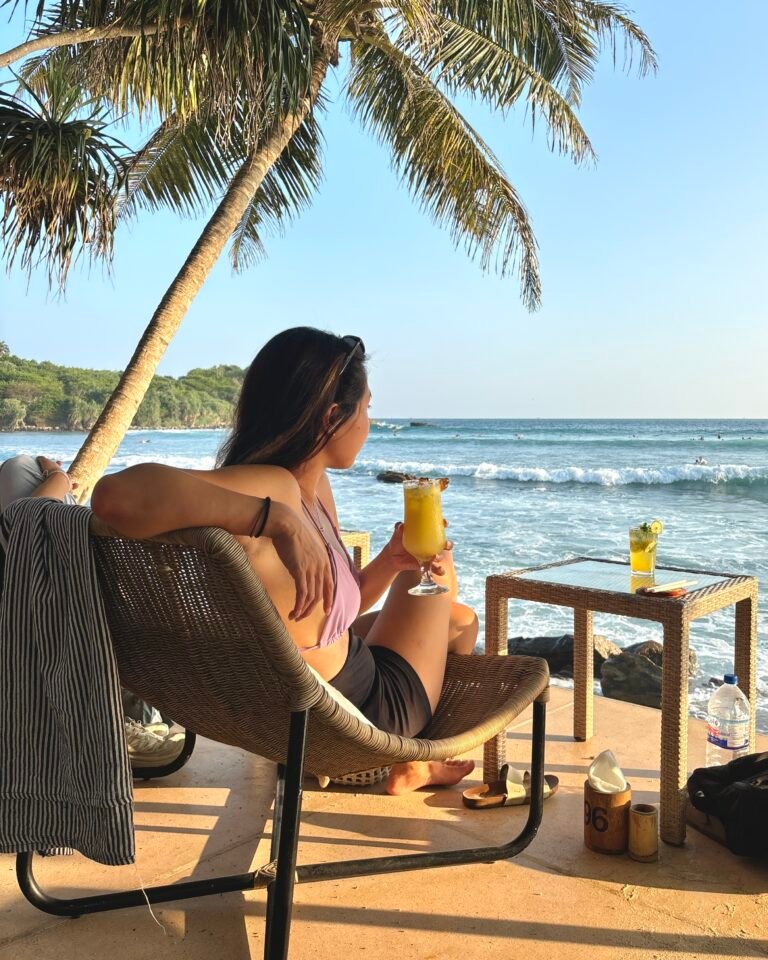
Hiri gets quite busy and social by midday, and due to the rising popularity of this town, the beach can sometimes feel small and crowded. But personally, the atmosphere is just so incredible in this town, it makes it worth the while. After a day of catching waves and lying in the sun, we made it our mission to explore its boutique shops for new outfits and surfing essentials, all in time to drink cocktails by the lapping waves under the sunset skies. Having a slightly separate, quieter base to retreat to in the evenings was simply delightful.
Our Time in Weligama
Weligama was a different setup entirely.
One of my most loved aspects of travelling to surf coast is being part of surf camps, so it did not take much convincing for us to set up for 4 nights at a surf camp called Lucky’s just off the shores of the main beach.
This beautiful camp came with a package that offered a spacious room to settle in, structured surf lessons at dawn every single morning, breakfast served afterwards on the rooftop cafe and plenty of free time to explore the surroundings. Not to mention video analyses with instructors to correct your form each week and a community of surfers who had just the right amount of energy.
Our daily pattern was one we grew to love. Up before the heat set in, straight into the water, paddling out against the swell of those morning waves. Then coming back ashore to the most incredible pancakes and acai bowls filling our bellies while we watched the sun gleam on the waters we were just in.
We would stretch out our well earnt mornings by reading our books and washing the salt off our bodies, before picking a nearby towns like Ahangama or Mirissa to explore, setting off on our tuktuk rides all before noon. Some nights we would eat with the other surfers by the beach under the stars, others we found our own local restaurants to enjoy. But you best believe we also ended up tucked up in bed, ready for another early morning start.
Don’t get me wrong, our bodies were tired and battered by the end (pretty certain Pat had a bruised rib for about 4 weeks after that, eek). Yet despite the aching in our muscles of this intense 4-day experience, I could not help but feel proud and invigorated by the improvement both Pat and I made in that short window of time with our surfing.
Weligama: The Beginner’s Paradise
Weligama, literally meaning ‘sandy village’, is a few kilometres of open, south-facing bay, with gentle waves and a sandy bottom which is much more forgiving for timid beginners. This combination is the reason Weligama has become a very common answer to: “Where do I learn to surf in Sri Lanka?”
Reasons to Visit Weligama
- The bay is built for beginners. Waves are generally long and gentle, and the sandy-bottomed break with multiple peaks along the coast means camps of twenty people can spread out without constantly colliding into another.
- Surf schools target improvement. Most of the surf stalls lining the beach offer surf lessons rather than just board hire, which is much more targeted to those wanting to stay a few days. This allows you to more easily perfect techniques like pop-ups, paddling, reading a wave etc.
- It’s the better base for day trips. Weligama is pretty centrally placed between other stunning towns. This positioning is perfect for easier access to the rest of the south coast and more flexibility to your needs after the surf, and makes it a good base to consider.
- The food scene is unpretentious and local. Whilst not particularly fancy, the roadside stalls and the fish market have much more of a local flair for those who want to experience a more authentic side of Sri Lankan cuisine.
- It doesn’t feel claustrophobic despite the crowds. The bay is long enough that even at peak hour with every surf school in the water at once, there’s room to spread out.
Hiriketiya: The Boutique Bay
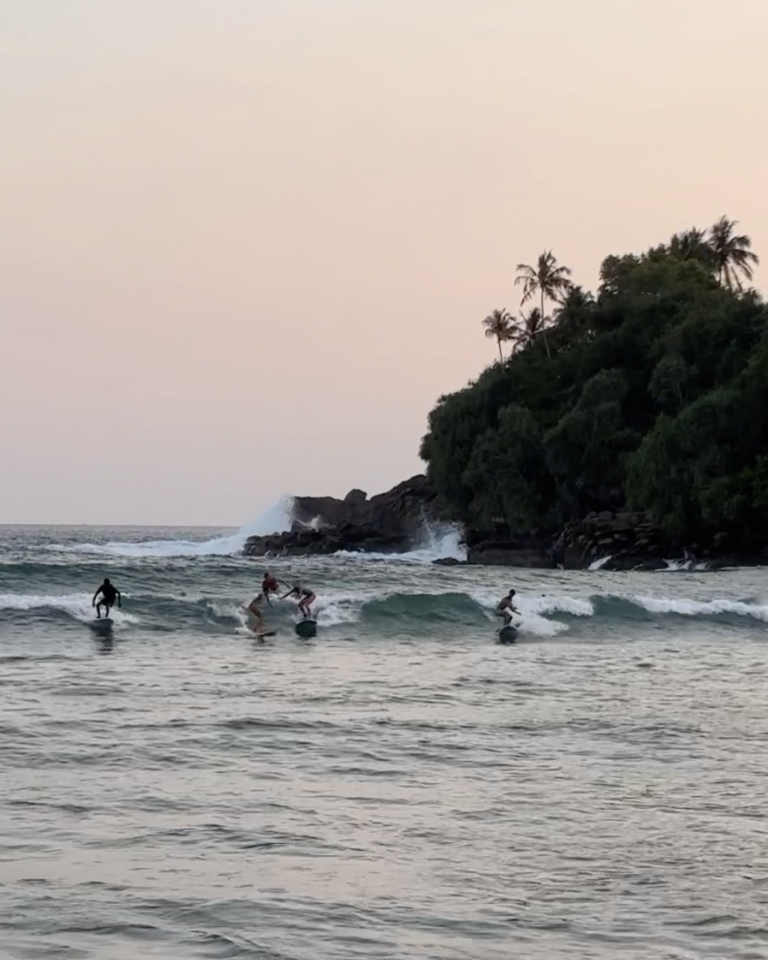
Hiriketiya has a bay that is identified by its near perfect sheltered crescent moon shape. Waves have a more defined break than Weligama’s long open stretch, perfect to challenge intermediate surfers. However what sets the town apart has less to do with the wave and more to do with everything around it.
Reasons to Visit Hiriketiya
- It’s a better fit once you can already surf. The point break is the one we would recommend, however it is only fit for those used to a punchier and shorter set. While the beach break is typically recommended for beginners, we would not recommend this as the waves take a while to form, and combined with crowds in the water, makes for a frustrating surf at that level.
- The restaurant and bar scene is superior. Most of these places are not only elegant beachfront, but consistently delivers with food that leaves your mouth watering and cocktails mixed with skill. They are also the kind of places you spend many hours at from day into the late evening to watch the surfers in the water enjoy the waves.
- The whole town is extremely compact. Everything curls around one picturesque little bay, so the vibe is lovely with everyone concentrated rather than spread thin along a large coastline. Music can be heard from one section to another, lights all illuminating the beach in the evenings – it is a wonderful atmosphere to be a part of.
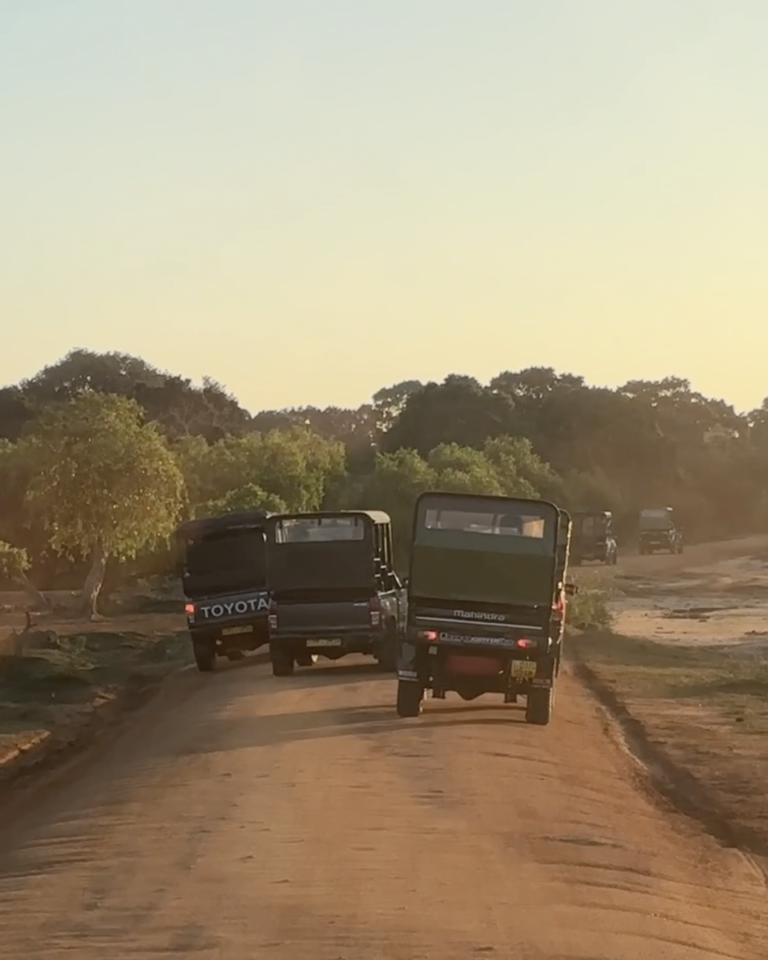
- The location makes it accessible to the national park. Hiriketiya is much closer to Yala National Park, and therefore it makes it possible to do an early morning safari without sacrificing staying near the coast.
- It’s one of the stronger digital nomad bases on the south coast. While I have not worked in Sri Lanka, several proper co-working style cafes seem to be available, and this is useful for stays stretching into weeks rather than days.
So Which Should I Choose?
To really differentiate the two, you must be clear on your purpose. If you know what matters to you on a trip, honestly it is not so hard to choose between these two towns. So honestly, the pick depends entirely on what you tend to enjoy atmosphere wise.
To give you a sense of my recommendations after staying in both:
- Complete beginner in surfing: The density of surf camps and instructors means faster, more structured progress in a short amount of time.
- Already have a pop-up, want to build skill: The sharper waves are fun for those who want a faster set that challenges their existing skills.
- Working remotely, and staying for a weeks or more: The cafes are more aligned with those that offer some working infrastructure. The slower pace also suits a longer stay far better than a camp focused town where people come and go.
- Travelling as a couple or with a non-surfing partner: There is more to do off the board within the town, and the food and bar scene makes for an enjoyable and romantic time with a partner (not to mention those sunsets!).
- Budget-conscious: You may need to pay a slightly higher ‘aesthetic’ tax in Hiri for its food scene compared to Weligama’s more local flavours. However keep in mind that compared to other surf regions with what you would pay for that coastal lifestyle or learn to surf, both towns can be done relatively cheaply.
Check out my comprehensive guides for Hiriketiya and Weligama here for more info on these destinations.
Getting There, Cost and Timing
Transport Routes
Both towns sit on Sri Lanka’s south coast, within about an hour of each other by tuk-tuk. Both are fairly easily reached from Colombo via the Southern Expressway (roughly 2.5 to 3 hours by car or private transfer) or the coastal train line that ends in Galle, which is what we did. From there, a mix of tuktuks or car will get you straight to either towns.
This latter method is slower, but amazingly scenic, not to mention thrilling if you wanted that feeling of hanging out of a fast train with no door. And bonus, the train tickets costed no more than 500 LKR ($2.20 AUD) each, so a definite win for those would are more on a budget.
Cost and Budget
Budget wise, Hiriketiya is typically paid for in pieces with accommodation, food and the occasional lesson booked separately, whilst Weligama surf camps typically bundle accommodation, some meals and daily lessons into a single package, which makes it easier to estimate costs upfront.
For reference, our spending per person (including accommodation, activities, food, transport) across the two towns were:
- Weligama = AUD$$895.40 across 4D,4N = AUD$223.90 per day
- Hiriketiya = AUD$472.30 across 3D,3N = AUD$157.40 per day
The difference in the per day breakdown here is largely due to the daily surf lessons that we would have had in Weligama compared to just hiring boards in Hiriketiya. Both destinations work out to be quite similar if we take that into account, and our spending seemed to be balanced with no clear winner on the budget front.
Timing
Sri Lanka has alternating seasons when it comes to surf and weather between the North and the South of the country. The surf season on the south coast times well with the dry weather, and runs roughly from November to April. During these times, the swell is more consistent and the water calmer for beginners. This makes it an ideal window for most travellers.
However, if you were to travel outside that window, surf happens all year long. The benefit is that it lies outside peak months, and the cost could go down even more if you are happy to endure some rain. Just be aware that the conditions get rougher with the Yala monsoon season around May to July, and there are likely better options to avoid that by shifting to the east coast instead like Arugam Bay.
Wherever your travels may take you, having travel insurance is non-negotiable.
Particularly in this part of the world with these kinds of activities, surf injuries and unexpected events are common and cannot always be avoided. To make sure you have peace of mind that you’re kept safe during any travel event, make sure you purchase travel insurance before your trip starts.
The Bottom Line
If you’re wanting to learn how to surf, Weligama is a great starting point, while Hiriketiya lets you enjoy what you have learned and reap the rewards of having a boutique setup around it.
Neither is the objectively better bay, and our experience is that we were very happy to spread our time across both. Remember, the south coast’s biggest advantage is that they sit close enough together that there is little risk in choosing one over the other… we will always recommend exploring anyway!
Stay tuned for comprehensive guides to more of these Sri Lankan cities and towns as they get published - sign up below and be the first to be notified!