Sigiriya Travel Guide: Best Things To Do and Where To Stay in the Cultural Triangle
In every Sri Lankan travel story, there usually some sort of opening scene with great expansive plains, the sun rising in the background, and a rock that sits high above the others. That iconic town is called Sigriya, one of the quaint areas in the heart of the country that forms the cultural triangle of the region. And sure enough, standing loud and proud right in the middle, is one of the most photographed features of the Sri Lankan landscape.
During the planning of our two-week Sri Lanka itinerary, Pat and I found ourselves in absolute agreement that we needed to start our journey here. Wasting no time leaving the airport city of Negombo, our patience was truly tested with a several hour car ride in utter anticipation despite our jetlag before the infamous rock appeared before our very eyes. Lion’s Rock is a hard one to miss, towering above the forest and dusty pathways that wind around forming the main town. We were transported straight into what makes Sri Lanka, well Sri Lanka.
This region has a strong cultural pulse with a heap of history, combined perfectly with natural beauty that makes you feel suspended in time. Our mornings were entirely dedicated to seeing some beautiful sunrises, and they truly did not disappoint. By afternoon, the heat has well and truly enveloped the land and some much needed relaxation time by the pool was what we needed to recover, especially after those early wakeups. And what makes the evening special is that this region of Sri Lanka is unbelievably local, with family restaurants spread out, serving some of the most authentic food we ended up having during our entire trip.
To make sure you enjoy your stay and make the most of your time in where we consider the best starting point of any Sri Lankan trip, here is our comprehensive Sigiriya travel guide based on our own experiences to help you make the most out of your trip.
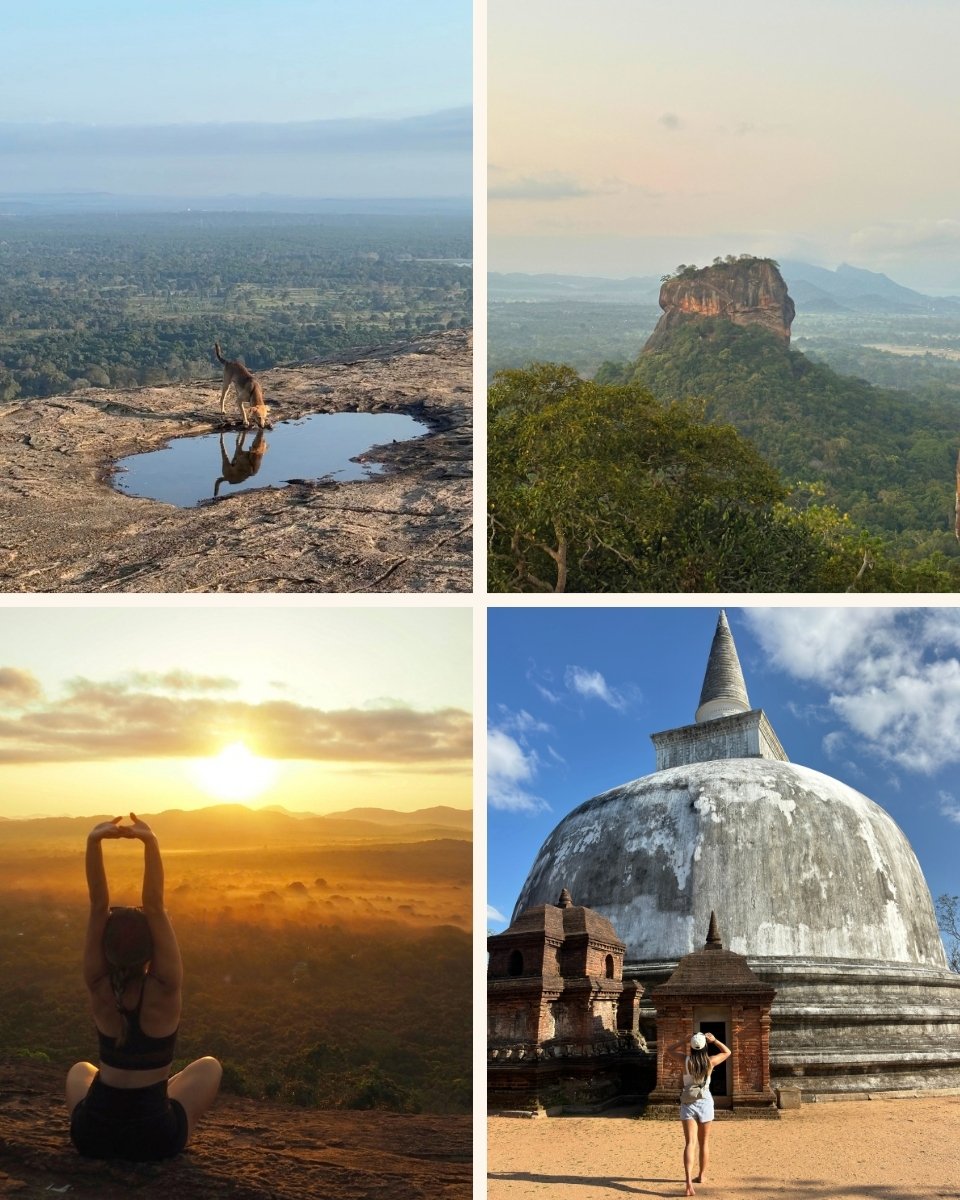
Table of Contents
Sigiriya Overview
|
Category |
Sigiriya |
|---|---|
|
What to Do |
Hiking up rock formations (Lion’s Rock or Pidurangala Rock), explore Dambulla Caves, day trip to Polonnaruwa Ancient City |
|
Where to Stay |
|
|
Where to Eat |
MC Cafe, Attikka Restaurant, Roadside Stalls |
|
Transport |
Tuktuks, private cars |
|
Cost |
$100-$150AUD (LKR 23,000 to LKR 34,600) each per day |
*Based on current exchange rates as of Sep 2026.
Who is Sigiriya for?
Sigiriya is predominately for the traveller who enjoys a blend of cultural and natural wonder.
The town is sparse and simple, set up for nothing but an authentic glance into what Sri Lankan culture is about. You don’t really need long here, but what you’ll get is a distinct flavour of what this country is like not only today, but dating back centuries.
This destination is best fit for those travelling in a couple or a group. The reason I would not recommend spending too much time here as a solo traveller is because it is a much more isolated destination than any of the others along our itinerary. From both a safety and enjoyment perspective, I would always recommend that the location is not so removed from where majority of travellers are, particularly in the first leg of a journey.
However if you are travelling with others, this is a place that gave us the most authentic experience, and spending a few days here was worth it.
What to Do in Sigiriya
The activities in Sigiriya are ones that get you excited to understand more about the country, while still giving travellers like us a taste of some active outdoor adventure.
Keep in mind that inside Sigiriya itself, there are not a whole lot of activities to do – however it is very conveniently located between other points of interest that add to the cultural experience while you are in the region. Because of this, our list consists of several day trips that are worthwhile to justify a night or two stay without feeling like you’ve wasted any time.
Hike up Pidurangala Rock
I know, what kind of article doesn’t put the other more infamous rock first?
Anybody who has looked up Sigiriya before will know there are two rock formations. I liken them to being two sisters, one more popular and outspoken while the other more soft and demure. While we will touch on Lion’s Rock in the next section, it is our experience at the quieter Pidurangala Rock that really made that first impactful impression on us for our Sri Lanka trip.
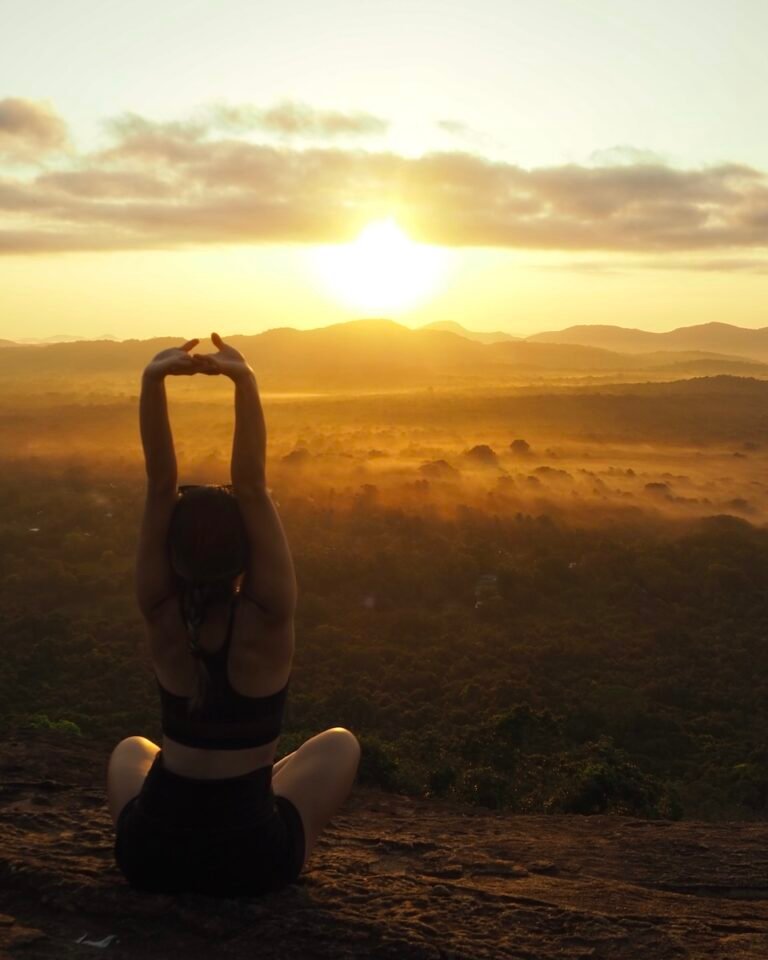
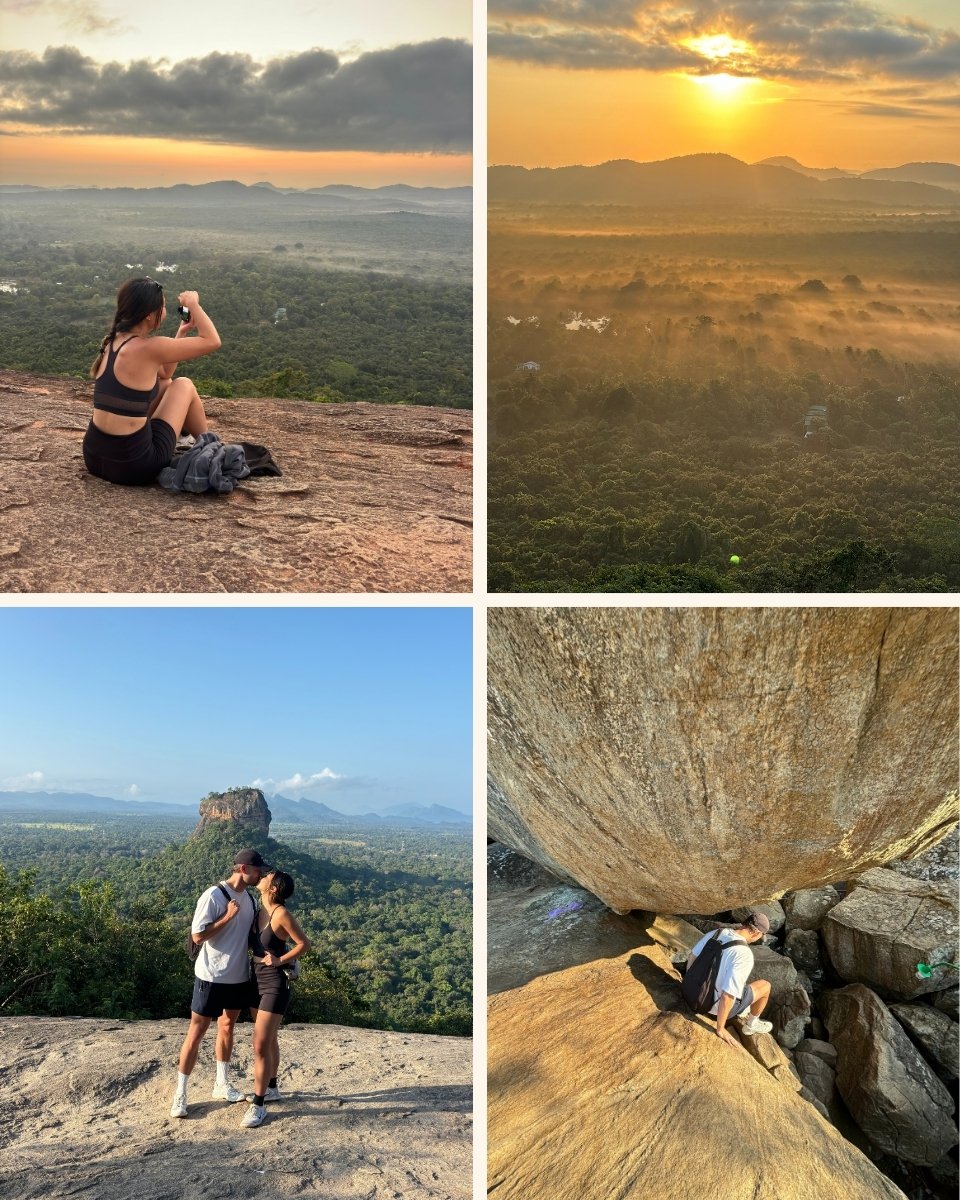
The mission is simple when hiking here: You have to see this during sunrise. For a relative short thirty minute climb that is achievable for most fitness levels (despite some harder boulder climbs near the end), the great reward of a sweeping view of the lands almost feels too good to be true.
I will always remember the pounding in my heart as our driver took us the wrong way in the darkness, and had to navigate around the long way to reach the entrance to the hike. Pat and I were almost running up, breathless but hope alive that we would not miss the first break of sunlight on the horizon even though gradual morning light started seeping in. And how in awe we were standing at the top, just in time to watch the light go from pink and soft at first to the sun breaking out brightly, casting a gold through the morning mist over the land.
The are several reasons we loved this was that whilst the entrance was harder to find. The first important one: We had no crowds. The entire experience until we reached the top involved encountering maybe one or two people, and even at the summit, everyone had space to spread out and appreciate the glorious scene unfolding before us.
Another bonus is that Lion’s Rock was also right there in view, making it the more photogenic spot having the feature of Sigiriya in shot instead of standing on it.
Insider Details:
- The cost for entry is 1000LKR, paid at the beginning of the ascent. This is a much lower entry cost compared to Lion’s Rock for the same (if not better in our opinion) view.
- Currently as of Sept 2026, there is no option to purchase admission online beforehand.
- Leave early, and allow both time to find the start of the hike and to complete the hike itself. We recommend starting the hike 40-50 minutes before sunrise. Our driver got confused with the entrance, and you do not want to miss what you woke up so early for.
- On your descent down, you will come to a small platform that has a perfect view of Lion’s Rock. Don’t miss the opportunity to take a beautiful photo here!
Hike up Lion’s Rock
Now onto the much flasher and louder sister, Lion’s Rock.
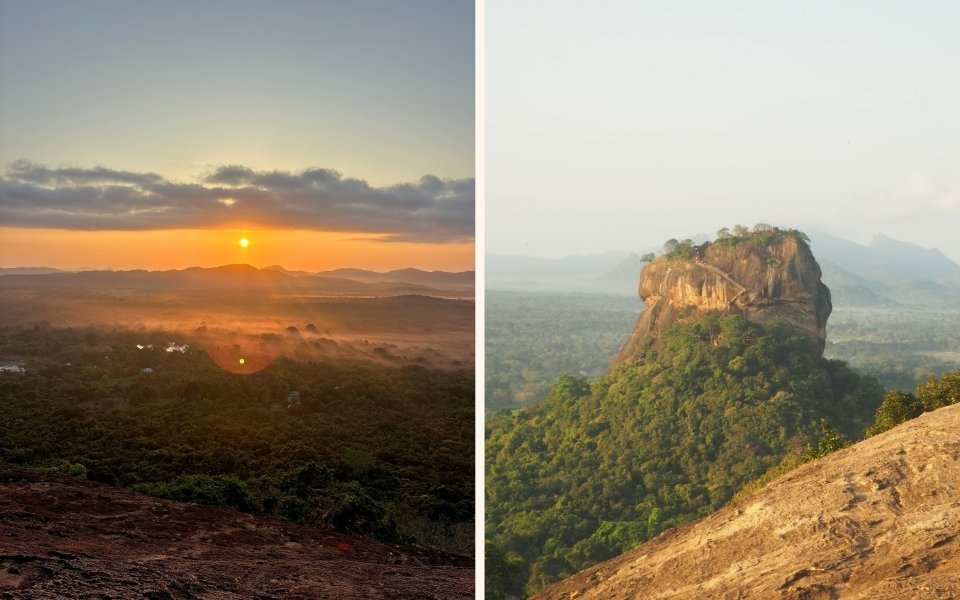
Often referred to as the jewel of the region, it’s likened to that signature feature of the country, much like what the Eiffel Tower is to Paris or the Empire State Building is to New York. It is listed as a UNESCO World Heritage site, and unlike Pidurangala Rock where there is nothing notable at the top, an ancient ruin city is there for you to explore. Several levels of olden structures and outdoor pool formations, all pieces forming a formidable rock fortress that is so unique to Sigiriya. And boy do those photos look mighty impressive.
But full disclaimer, we chose not hike up Lion’s Rock. This was a decision made from a multitude of reasons that made us choose Pidurangala Rock instead.
Quite frankly, a lot of this was logistical. We have heard from other avid travellers that this hike is very popular, so much so that it is frequently subject to long queues and crowds especially during sunrise. The price of admission is also a factor for us, considering at $35USD for an adult, this is over 10 times the price of hiking up Pidurangala! And finally, you will never see the feature afar when you’re standing on it, and we really appreciated that the photography we got and those sunrise views had Lion’s Rock in our background to enjoy.
However, this is not to dissuade anybody from doing it – this is famous for a reason. With more time, maybe we would have done it anyway, but with our constraints, we chose Pidurangala Rock and it turned out to be special enough for our stay in this region.
Insider Details:
- Entry as a foreign adult is $35USD, and includes admission to the Lion’s Rock Museum.
- Ticketing offices open at 5am, so depending on time of year and how busy it is predicted to be, get there early so that you do not miss getting a ticket and completing the hike before sunrise at the top.
- Tickets can be purchased online for Lion’s Rock, through the official central cultural fund website: https://eservices.ccf.gov.lk/eticketing/landing
- The ascent takes around 30-45 minutes with no crowds, but allow for 1-2 hours on top to enjoy the ruins and the natural beauty of the views. As always, leave enough margin especially if you are aiming to see a sunrise considering it does get busy.
Visit the Dambulla Caves and Temple
Dambulla Cave Temples is the second part of the cultural triangle, offering an interesting experience to explore rock temples originally occupied by Buddhist monks and gradually enhanced by following reigns of monarchs throughout the centuries.
Located about 30 minutes away from Sigirya itself, this is a very popular day trip to appreciate the deep history steeped in Buddhism, with coloured caves and many statues located in these unique formations. The temple itself is located on top of a cliff, and requires a bit of a walk up staircases which can be grind on a hot day. After that, 1-1.5 hours of time is often referred to as enough time to explore the five caves and the surroundings.
We have heard some great things about these caves. In fact, one of my colleagues said it was the highlight to his entire trip when he went there ten years ago. However for us being a little bit short on time, we decided to skip this attraction for the next one on the list. If we had more time, either a private driver or short day tours to the caves is a manageable way to explore this historic site.
Insider Details:
- Entry as a foreign adult is 2000LKR, and can be purchased online ahead of time through the official central cultural fund website: https://eservices.ccf.gov.lk/eticketing/landing.
- To avoid the heat that makes the experience uncomfortable, visit the temples either early morning before 9am or in the afternoon after 3pm.
- This is a sacred site, which means that dressing in appropriate clothing is important to respect the culture. Cover shoulders and knees, and be prepared to take off your shoes inside the cave grounds.
Polonnaruwa Ancient City
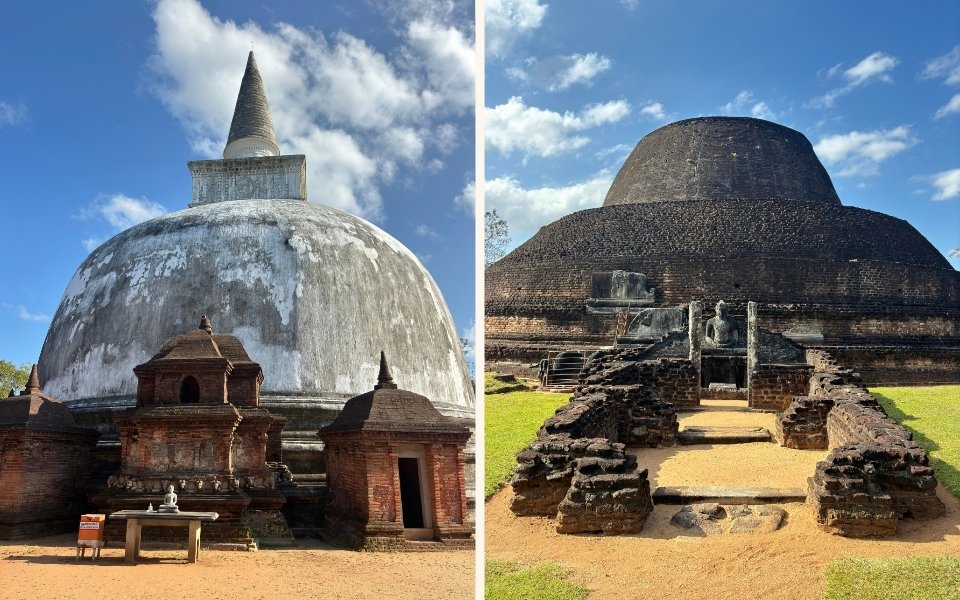
While we skipped Dambulla, we focused on the another infamous site within the cultural triangle – exploring the ancient city in Polonnaruwa.
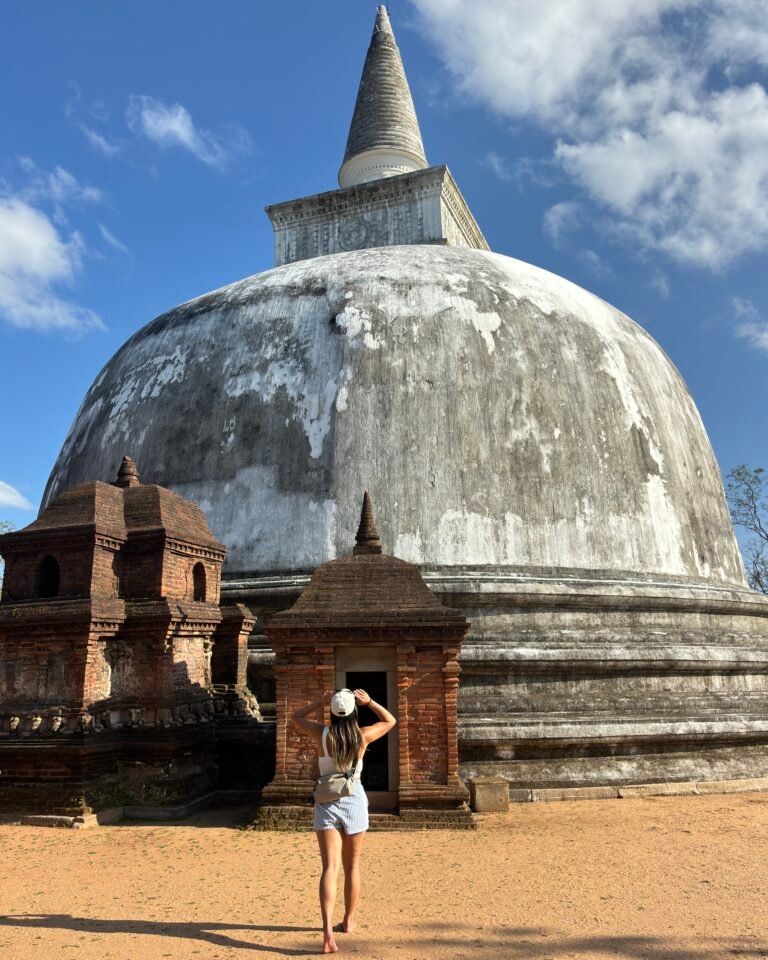
This city was a bit more of a trek away at 1.5 hours away by car, but by far did this ancient city have a lot to see in comparison to some of the other sites we had contemplated. Being another UNESCO World Heritage site, the ruins of this archaeological site definitely earns its place with the incredible structures that has been left behind. From the Royal Palace to the swimming pools, the large scale buddha statues to the dome shaped ‘dagabas’ forming beautiful temples… You could spend several hours browsing this place and marvelling at the wonders, and imagining what life may have been like in the ruins of this olden city.
I will give all the credit for this little self planned excursion to Pat, for doing the research and giving us a memorable experience by exploring on a bike. Not only was I quite amazed at the grandeur of the sights this ancient city had to offer, being able to explore by bike along the wide and sometime dusty roads… it really made me feel like a little kid again. I will always have fond memories of us zipping through the streets alongside the little temple monkeys, hopping from site to site and enjoying the afternoon sun under the shade of the trees around this beautiful area.
So while I had next to no expectations, this was definitely one of the most enjoyable cultural activities we did on the entire trip.
Insider Details:
- Entry to the ancient city costs $30 USD for a foreign adult, and the ticket price includes the museum located at the entrance.
- Daytrips are very feasible, but results in a long day so be prepared with yours scheduling! If you don’t already have a private driver, the easiest way would be to join a day tour from Sigiriya to Polonnaruwa.
- There are many attractions to see, but our standout favourites if you had to pick were Buddha statue at Lankatilaka, Dagaba Kiri Vihara and the Royal Palace.
- Bike hire can be found just on the outskirts of the city near the entry. Expect to negotiate a bit, but a reasonable amount to pay would be 500LKR for the day. Note: We actually paid a lot more than this and only realised much later, so beware those who are trying to get more than what it’s worth!
Where to Stay in Sigiriya
Sigiriya itself is a town built around nature, with vegetation and rice fields across dirt roads surrounding those formidable rock formations. This means that the accommodation style is quite a bit different to those you see in cities or along the coast of Sri Lanka.
Many hotels will feature either villa style rooms, or cabins. The unique rooms will look like treehouses even, and for us those were the most interesting to really distinguish our stay here apart from any other destination. For a more remote and isolated place, the amenities are still fantastic, with many offering pools and restaurants on site to provide a one stop shop for all your relaxation needs while there.
Here is a list of accommodation across every budget category that we looked into during our stay in Sigiriya, including the one we ultimately decided to pick.
Choona Lodge
Budget Traveller
Our stay at Choona Lodge was incredible value, and gave us the perfect experience of a unique Sigiriya stay without a hefty pricetag.
We purposefully opted for something that had more of the region’s signature treehouse style, and choosing a private chalet surprisingly didn’t come with the cost that we would have imagined. The room itself was spacious, air-conditioned, and even had a lovely bathroom outside (which admittedly was nice in the daylight but a bit annoying at night trying to keep any bugs out of the room).
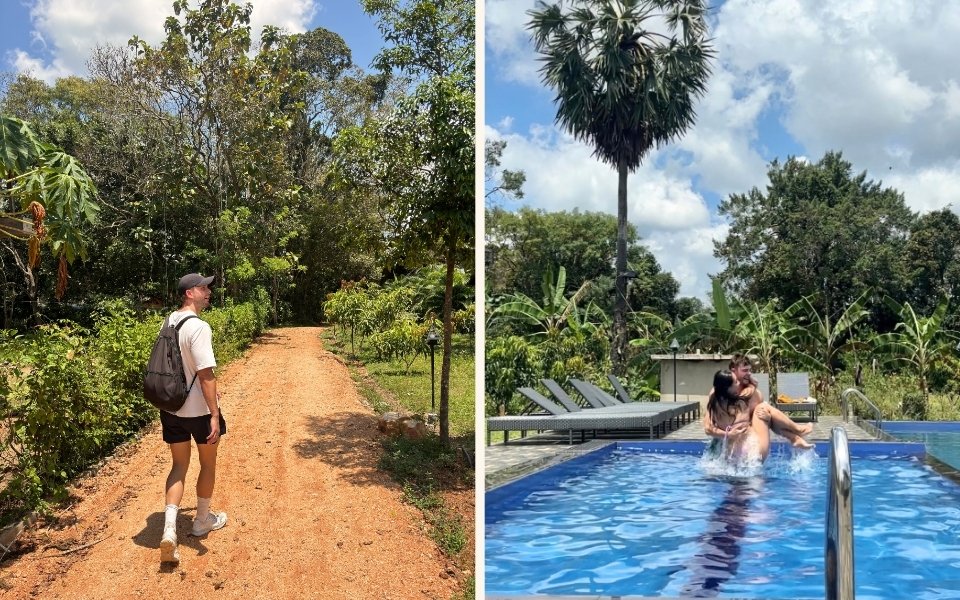
It was pleasantly close to both rock formations to set us up well for our sunrise hike, but what we came to truly appreciate though was the lovely pool on the grounds for us to use. This was well maintained and gorgeously pristine for us to relax under the heat of the midday sun – something that has made us realise how important it is to have a cooling relaxation spot within the accommodation in this region.
Other Great Budget Options
Roy’s Villa
Mid-Tier Traveller
This was a hard one to place, because ultimately it sits within the mid-tier level but offers across the board, catering for travellers of almost all budgets.
The design concept puts nature first and foremost, and houses luxury cabanas all the way to dorms rooms. The location is based around a rice paddy, all set up to enjoy a tropical retreat-like lifestyle complete with some authentic and locally sourced home cooked meals. In additional to all of this, it highlights a variety of cultural and therapeutic activities, and also provides a perfect starting point for excursions to Sigiriya and its surrounding neighbours.
What makes this a fantastic recommendation is that the villa itself has a notorious atmosphere for being friendly and social, with warm staff willing to help make the stay as pleasant as possible. There are even free activities being organised to help foster this community feel, and could be a really great selling point for those who are travelling solo.
Other Great Mid-Tier Options
Water Garden Sigiriya
Luxury Traveller
Water Garden Sigiriya houses 30 boutique luxury villas that offer a beautiful view of Sigiriya with its rocks and lush countryside as a backdrop. Designed by renowned and local architect Channa Daswatte, the design features really focuses on complementing nature and allow travellers to experience the height of luxury without disconnecting from the wildlife that surrounds the area.
For those who want to be well rested after a day in nature, the on site amenities include a spa and wellness centre, as well as a fitness centre. The site also houses an organic restaurant and a panoramic double level bar, plus authentic local dining set amongst a paddy field. The resort has an outdoor pool to cool off on those hot afternoons, and the air conditioned rooms offer large spacious living areas with outdoor decks and even private plunge pools to truly unwind.
Other Great Luxury Options
Where to Eat and Drink in Sigiriya
Sigiriya is truly a simple place, and nowhere near as extensive in good choices compared to the more coastal towns that we experienced later on with our itinerary.
But in place of the frills, the food around here is genuinely some of the most authentic that we have tried throughout Sri Lanka, which gives us a great taste of what the country has to offer here very early on with our trip. We’re talking family style, literally at the back of a home or by the roadside where people couldn’t even speak English and our driver had to order in our behalf.
For us, it couldn’t be any better considering we were here to experience the genuine version of Sri Lankan, and rest assured these flavours do not disappoint.
MC Cafe
While this name might make you chuckle (yes, we succumbed to a laugh too), trust that this highly rated family restaurant has a quality of food well beyond the golden arch.
Having seen that the menu looked very authentic with classic curries and roti on the menu, we decided to try out luck here. Our first night we showed up without a reservation, only to find the small dining area was already packed and a Sri Lankan man playing a guitar serenading his guests. We could help but feel disappointed that we weren’t part of it, and let him know that we would come back the next night.
And when we did return, we had the restaurant all to ourselves. We ordered a few of the signature dishes, and while we waited for our food, got to appreciate some of the more locally unique aspects of dining here. We were given insect repellent to keep the bugs off us, tableside games to keep us company, and realised both those things were necessary considering the family was cooking our meal from absolute scratch!
And despite the long wait, the food came out tasting truly splendid. We were not only serenaded by the restaurant owner, but also offered a ride back to our accommodation because he was worried about our safety in the dark of night with wild elephants roaming the grounds.
If that isn’t the most Sri Lankan experience you might ever have, not sure what is.
Attika Restaurant
Literally next door to MC Cafe, we found another rustic and adorable family style restaurant known for its delicious food and warm hospitality.
Just as charming as MC Cafe, Attika also had the right amount of touches to make you feel like dining with a family here in the heart of Sigiriya. The flavours here are really fantastic (we thoroughly enjoyed our first introduction to roti here, which came to be consumed with almost every meal for the rest of our trip), and the owners were also extremely friendly in making the dining experience feel pleasant.
Roadside Stalls
One of the perks to having a private driver is that they are the first to know where a local Sri Lankan would dine, and enjoy not only a very affordable, but deliciously authentic taste of the local cuisine.
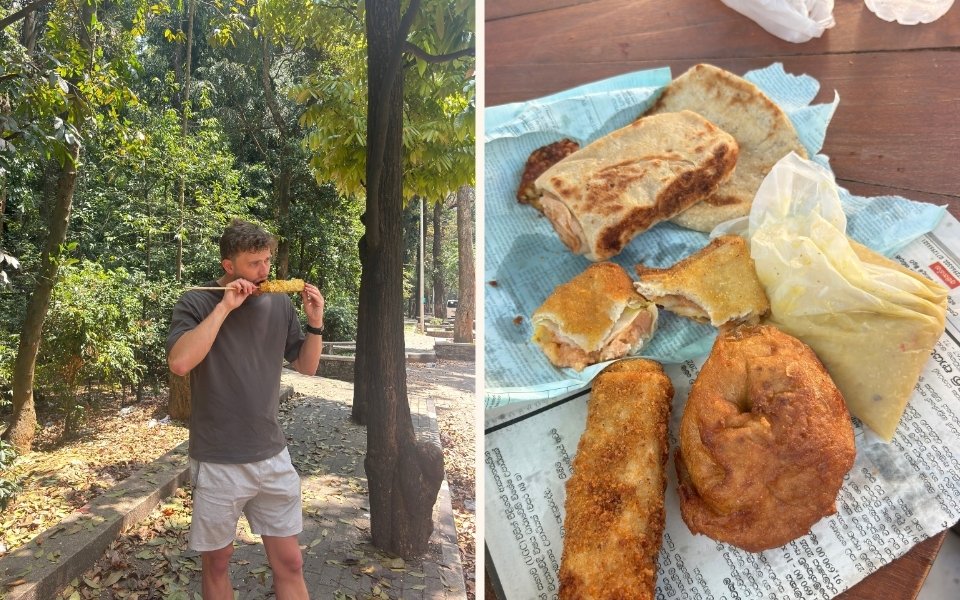
So in place of a specific recommendation, we could not recommend enough asking your private driver to stop at a roadside stall. Often simple concrete structures serving drivers and locals, these will appear as you make your way through this region looking for a bite to eat. It was across visiting multiples of these stalls that we tried Sri Lankan classics like string hoppers, roti, chicken curry, eggplant curry, coconut sambal, local breads, and more.
These are places that don’t even have cutlery, where you wash your hands and join the locals in tasting your food the traditional way. And while it might not be for everyone, we absolutely loved the experience. No matter if it was breakfast before heading off, or lunchtime for a quick feed, this was perhaps one of our favourite places to explore and try something undeniably Sri Lankan.
The practical stuff: Transport, timing and cost breakdown
Transport
If you have followed our two week itinerary through Sri Lanka and have come from either Colombo or Negombo after your flight, the best and most efficient way is to go via private car, which is a 3-4 hour journey. It is likely that you would need this private car for a good portion of your travels during your stay in Sigiriya or afterwards as you make your way to the next town, so it is worth it to negotiate a couple of days with your driver and settle on a cost before you even arrive into the country.
Taking public transport like the train or the bus is not an efficient way to get to Sigiriya, and we would not recommend this unless you had a lot of time to travel or are very concerned about your budget. Both the bus (either via No. 15 bus to Anuradhapura, or No. 48 bus to Kaduruwela) or the train (Colombo Fort Station to Habarana Station) would require transfers to get into Sigiriya, taking 4-5 hours. You will have to get off at the hub of Dambulla, and from there, take a local bus or tuktuk that would take you to Sigiriya.
Once in Sigiriya, the best mode is to either use your private driver, or an app like PickMe that can help you order a tuktuk. Just be careful that because Sigiriya is a bit more spread out, and some restaurants you end up in may be more secluded in location, that you have organised for someone to pick you up. It can sometimes be difficult getting a tuktuk on the app in these scenarios.
Timing
Sri Lanka is subject to monsoon periods that sweep over different parts of the country during the year, and Sigiriya is somewhat in the middle of this.
The best time to go is to avoid when the monsoon season, and the time of year considered the most pleasant in this region is December to March.
Outside of this season, you are dealing with two different reasons why it might be more undesirable to travel in this area. June to September is considered drier which is good for avoiding rain, but also hotter. When we went in April for our trip, by early morning it was already very hot and we had to spend most of our afternoon by the pool. So during an even hotter period, this could be a big consideration for those who do not enjoy extensive heat, particularly as the area is known for walking and hiking.
During October to December, the region is in its monsoon period and can experience some heavy rains. This also presents issues of cloud cover and low visibility environments where you would typically summit for those sweeping views of the region, so we would not recommend trying to explore this region during these months if you can avoid it.
Cost/Budget
The total cost for our 2D, 2N in Sigiriya was $231.60 each.
*Note that all figures are in Australian Dollars (AUD), and will be referenced as such throughout.
The full breakdown by category:
- Accommodation = $69.70, or $34.85 per night
- Transport = $71.70, or $35.85 per day
- Food/Drink = $44.00, or $22.00 per day
- Entertainment = $44.80, or $22.40 per day
- Spending = $0.00 or $0.00 per day
- Admin = $1.40 or $0.70 per day
- Other = $0.00, no unexpected events.
The following spending trends were what we noticed after looking at our final costs.
- The transport was our most significant spend, considering that it had to get us from Negombo to Sigiriya and also facilitated our day trips to places like Polonnaruwa.
- Sigiriya does not have a huge shopping area (ie markets, boutiques) for spending, therefore it was our lowest spend category across all.
- Our accommodation costs were quite low in comparison to other legs of our trip, but it is worth noting that we did not have breakfast included in our accommodation for this leg of our two week trip.
Please keep in mind a few things that may differ for you:
- Time of travel: Part of our travel fell in the shoulder season for the South/West (having some time in April), and the limited flight paths at the time cut off travel routes for a lot of European flights. These factors lowered accommodation costs, but increased transport due to fuel prices.
- Travel Style: Our travel style for this trip is in the middle range, where we were not seeking budget travel, or luxury top end. You can definitely save or splurge more than us, see our recommended list of accommodation for every budget category.
Frequently Asked Questions (FAQs)
How many days do you need in Sigiriya?
Two days will comfortably allow you to do everything you need in Sigiriya, including allowing one day trip to either Dambulla or Polonnaruwa.
We took the time to relax as it was the start of our two week Sri Lankan itinerary route, and two days allowed us to get an authentic experience in a nicely paced time frame without having to rush.
Can you visit Sigiriya as a day trip, or do you need to stay overnight?
Yes, it is possible to do Sigiriya as a day trip from Dambulla or Kandy.
However, be cautious that this will involve a decent amount of time on the road, and this may be particularly important if you wish to get to Sigiriya in time to do the hikes during its most beautiful moment – at sunrise. For this reason, we would recommend staying at least one night to give you a morning to experience this.
Would you recommend Lion’s Rock or Pidurangala Rock?
We recommend Pidurangala Rock if you had to choose, for several reasons.
The entrance fee for this rock is much more affordable (over ten times cheaper for one admission), there are less crowds to get to the summit, and your experience at the top includes a view of the infamous Lion’s Rock in the distance which is great for photography.
However if you wish to explore the ruins and the culture wonder of this, Pidurangala Rock does not have this feature which is unique to Lion’s Rock.
Is Sigiriya suitable for solo travellers?
Of all the towns in Sri Lanka, Sigiriya is not the most solo traveller friendly place.
The social atmosphere and community in Sigirya is not as strong as what we saw in the likes of Ella or the coastal regions like Hiriketiya and Ahangama. The town is a lot more isolated, and I will always recommend that solo travellers, particularly inexperienced ones, stay somewhere that is a lot more connected for both safety and to minimise risks of feel lonely.
Do you need cash, or is card accepted in Sigiriya
As Sigiriya is a smaller town, cash is king.
Often, we found that guesthouses, tuk-tuk drivers and local restaurants mostly expect cash, though the ticket office and larger hotels may take card. We would recommend taking enough cash from Colombo or Negombo before you get here, rather than relying on finding an ATM locally.
Wherever your travels may take you, having travel insurance is non-negotiable.
Particularly in this part of the world with these kinds of activities, hiking injuries and unexpected events are common and cannot always be avoided. To make sure you have peace of mind that you’re kept safe during any travel event, make sure you purchase travel insurance before your trip starts.
Final Thoughts: Is Sigiriya right for your Sri Lanka trip?
If travelling to Sri Lanka and experiencing the country from a more cultural lens is something that interests you, Sigiriya provides that in a way that we haven’t encountered in other regions. The history that you can see right outside your doorstep, the ancient ruins and myriad of UNESCO World Heritage sites all within a day’s travel… That is the true shining star that makes a stay in this town so worthwhile.
What we found was that this was also our most authentic leg, from the style of living to the preparation and taste of the local cuisine. It felt like you could really envisage how communities live here in a way that is not put on for tourists, but really just embodies a sense of welcoming – making it the absolute ideal start for any trip here.
If you prefer more mountainous adventures or surfing trips however, check out my guides for Ella, Hiriketiya and Yala National Park for more inspiration.
Stay tuned for comprehensive guides to more of these Sri Lankan cities and towns as they get published - sign up below and be the first to be notified!