Non-Tech Digital Nomad: How I Successfully Worked Remotely as an Engineer (And Slow Travelled Europe for 6 Months)
Every person who loves to travel probably a dream or two about being a digital nomad. Sitting by the beach and typing away as the ocean waves roll over the sand, or tucked up in the corner of a cosy local in an entirely different part of the world… There is something about being able to fulfil that sense of adventure while still be self sufficient that is just so enticing.
However, most people sober up to reality quickly, and come to the conclusion that their careers would never let them pursue that. After all, that’s only a possibility in tech with those software design or digital marketing skills, right?
I definitely thought the same, and so it gives me great pleasure to prove that wrong. Not only have I been successful in negotiating my role as a digital nomad for half a year to live in some of the most sought after destinations within Europe on an Australian salary, I did it as a professional in a non-tech field as a structural engineer.
Having lived it, breathed it… It gives me so much motivation to let my story and journey with digital nomading be proof that with the correct strategy, there is no reason why this is not possible for you.
So here I am, finally in a position to write down and provide you with an intimate and real roadmap to how I achieved being a non-tech digital nomad. We’re doing the deepest of dives into everything from my professional background to the origin story of the idea, the execution framework and the nitty gritty of negotiation. And finally, a glance into the wonderful experience with all the opportunities, challenges, and the honest truths that I would have loved to hear before setting out to do all this in the first place.
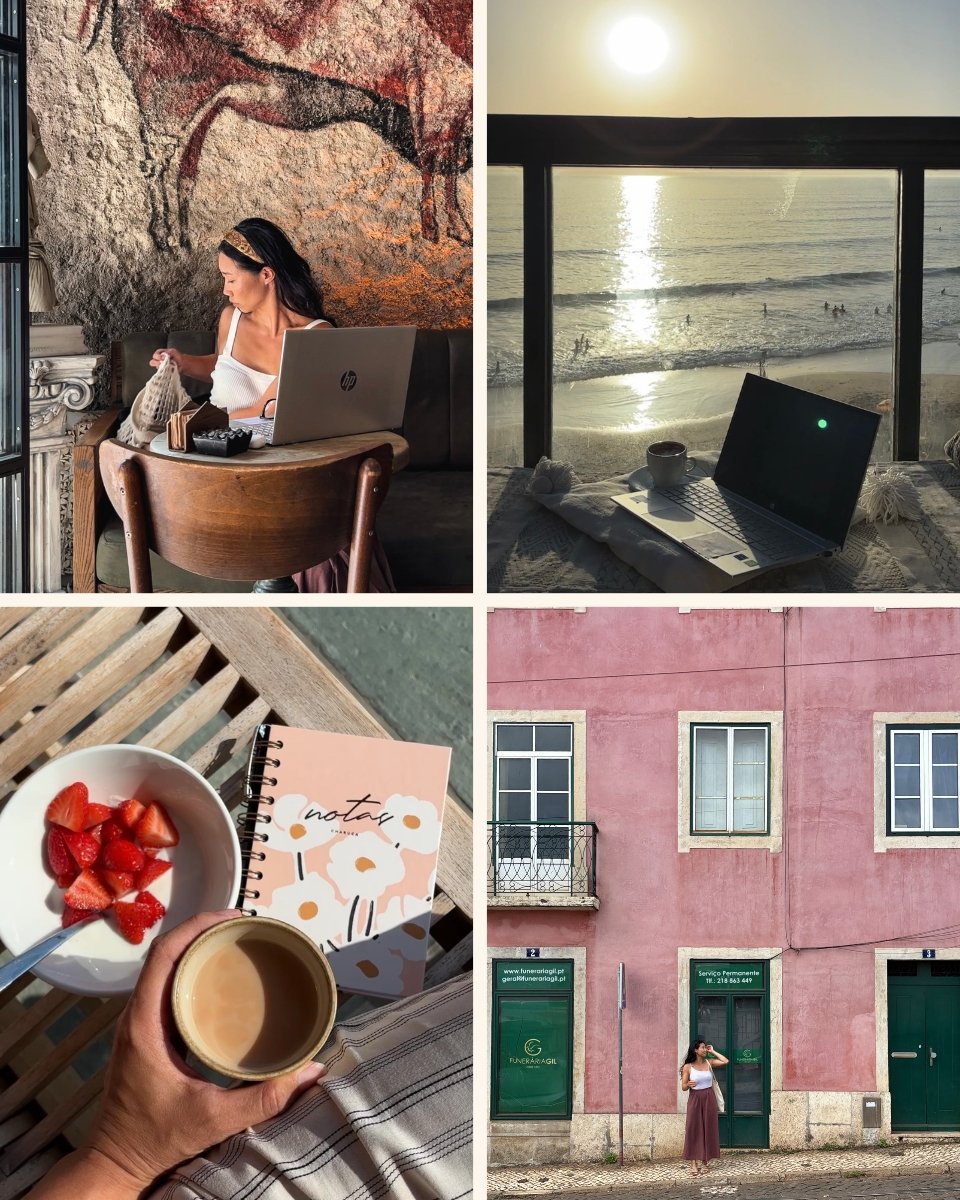
Table of Contents
The Background: From non-tech profession to digital nomad
My professional background at the time of my digital nomading was (as is currently) in structural engineering, with a full time role based in Melbourne, Australia. Simply put, it was my job to understand how to keep a building upright. Think: Numbers on a calculator, models on a screen, hard hat, dirty site boots by the door waiting to be stepped into to hit the pavement.
The one thing that consistently surprised most people that I met during my digital nomading time was what I did for my job. No, my role was not in a technology based industry – in fact half my job was to be out there on a construction site, boots in the mud. But here I was, a girl from the other side of the world, getting up at strange hours of the night to talk to builders, with the glow of the screen on her face before anybody was even up from breakfast.
Never could anyone, even including myself, believe that a role so embedded to being in meetings, to being on site, to working with a team, could translate to a remote working experience. It really became the inspiration for this post, when I think about how many people turn away from the idea because they don’t feel as they they have chosen the right industry that allows for that.
One of the biggest lessons from this entire experience that I will always hold extremely close to my heart is the power of asking. Because the worst thing someone could say is no. And what I’m hoping you’ll find throughout this post is that with a similarly thoughtful strategy, it really doesn’t matter what that background is in.
The Idea: The goals and motivation
It is really important to be clear on the ‘why’.
I am so passionate about exploring the mindset behind travelling and unravelling the why from that perspective, but is also extremely useful to have a good grasp of this as you move through the step-by-step process to negotiating your proposal as you’ll see later on.
For me, there were a few motivations:
- To create an opportunity for slow travel in countries without having to rush.
People have always travelled for different reasons, but the last few years have really seen a shift in travel culture. Instead we are no longer focusing not on how many countries we’ve has visited, but how purposefully and deeply we’ve been able to do that. And I love that.
As a traveller, I have no interest in collecting places like a stamps. I want immersion, as best as I could afford. To give myself that time to do the little things I enjoy in my every day life.
This experience is a privilege, one that realistically takes time and money, especially considering many of the locations were in Western Europe. So what better way to create both than through a working arrangement that allows me to do this, where not only was I granted some currency of money, but also the time to make living in a place a reality rather than just travelling to a place?
- To continue developing career goals – even if it is a little slower.
As much as I love travelling, I’m still a goals orientated person. And at the time, I truly did not want to give up progress in my career. I had to appreciate that this role involves skills and thinking that is highly technical – and whilst that may be nice to have had then then, it takes practice to maintain.
What I realised was, I could have stepped away to pursue this through another job. There will be many examples out there from people who have instead pivoted and expanded their tech skills, or quit altogether to work at the local jobs at a bar or hostel. There is no wrong way to go about it, but that wouldn’t have fulfilled my personal goals of building on a pathway I had worked for from the moment I stepped into university. So progress might have been slower, but each step felt like it was heading me in the right direction.
- To see what exactly a solo girl can do and how much she could learn.
Should I admit that the idea came from trying to make a relationship work? Fine, only because it only highlights what a girl can do when that turned into a solo journey in the end.
Every few years, it is fulfilling having that new travel chapter, and I knew I would be due for a milestone. I’ve done exchanges, internships abroad, backpacking, and recently packed my life up to move to a new country. But still my heart was set on longer style living and remote working in dream countries of mine.
These experiences give me with an overwhelming sense of empowerment (yes, I’m just a girl but I got this!). Every day was a challenge in the best way possible, and full of potential. I wanted nothing more than to just see what I was made of, and how far I could push myself. And more importantly, you get rewarded moments that cannot be replicated easily back at home. Opportunities to connect with cultures, to learn and develop yourself as a human, to create friendships and more in such peculiar places that last longer than you could ever imagine.
The Execution: How to approach the conversation (Step by Step)
Ah, finally the ‘how I did it’ part that you’ve all been waiting for. Well, I did promise a post full of info, so rest assured you’ll leave here with nothing but full details.
I can’t lie to you: This is the most difficult and nerve-wracking part of the whole process. Because let’s be honest, it is a bit of a do-or-die moment. Which makes it all the more important to really sit down and think about a strategy. Something robust, convincing and utterly irresistible for your employer to reject.
To help you achieve that same dream, I’m taking you through my own step-by-step strategy that worked for me. This framework I’m about to provide you is what I give the biggest credit to for making my proposal here a success. Each one of these steps is very important to building that business case.
This may not be an exact blueprint – there will always be many factors beyond our control unique to the situation. But it certainly will help set you up for success in providing a navigational path to how this conversation should be approached.
For the deeper dives into the steps, direct links will take you to my “How to Negotiate a Successful Remote Work Agreement (Even When You're Not in Tech)” post where you will find even more information!

Step 1: Initiating the Conversation
When it comes to starting this discussion, timing is truly everything.
Every company runs on a schedule of some sort on an annual level, and paying attention to will increase your chances of an approval for the request more than you think.
I initially intended to approach my managers in March of that year, but decided against that as they were conducting annual salary reviews during that time. I didn’t want my request for remote working to be had in the same conversation as evaluating how I was performing. So I chose to delay it till April a month later so that my managers could consider my request with a clear head.
Choosing a time that allows you to have a lengthy discussion without being interrupted is also important. Check the calendars of those involved, and make sure they are not preoccupied. Give them the heads up that you want to talk about the future of your career, so that they know it’s an important conversation without giving too much away. You don’t want to blindside them, but holding some cards close to your heart would be good to help you steer the conversation where you want in the next stages of this process.
→ Go deeper into Step 1: How to map your company’s calendar and the exact invite wording.
Step 2: Relay Your Motivation
Now you’ve got them in the room, you have their full attention.
I assume you’ve gone ahead and thought about your motivation. People need to know why and to understand your drivers for the experience – it helps them perceive that you are not just wanting to work from a nice little beach for the sake of it. It is a great way to start the conversation and give your employers the context of your request.
Give them the full background, and be honest about those reasons. In my case, I wanted to spend some time in another country to pursue a relationship. I was candid in my opening to let them know straight away that this was not necessarily a career driven move, however it would allow me to continue this career while I took care of another important part of my life. In my instance, I knew that my managers would value hearing the real reasons behind it on a human level, which allows them to further accept what you have to say.
→ Go deeper into Step 2: How to frame your reason, with sample openings.
Step 3: Frame up that Work Structure
This is the part of the conversation where you need to paint them the picture. How clear and concise you can make this will largely determine if a business or employer can accept the arrangement.
No matter what field you might be in, the areas you really need to hit can be simplified to three things. How long is this for, what changes about your role, and what working from there will actually look like.
For my case, the duration was July 2024 to December 2024 – with a clear intention of returning back to Australia in January 2025. My role would need to change to being more technical rather than client focused, considering the difficult time difference in Western Europe compared to Melbourne (varying between 8 to 10 hours, aka day and night!). I was honest with them that there would at best, be half a day of crossover time where my office at home would be operating vs where I would be working.
From there, I gave them a few options for what I was happy to do considering this, and what work would look like:
- Option 1: Continue full time work, accepting a full workload but only partial time available to the team.
- Option 2: Switch to part time work, accepted less workload but ensuring I am reachable 100% of the time that I do work.
In the end, we went with Option 2 and I could not be more glad for it.
My biggest tip is providing your company flexibility. The fact that I proposed two options gives them choice and agency – this switches the tone of the discussion from demanding an outcome to negotiating an outcome. They want to be able to have a say in how this all works, so give them an opportunity to do so.
→ Go deeper into Step 3: Explore more ideas of forming up a work structure.
Step 4: Present the Opportunities
You know when people say – do you want the good or the bad news first?
In this situation, I think you have to hit them with the good stuff first – the benefits and opportunities of this arrangement. This is the time to think outside the box, because where you want to get to is making them see: Hey, this is great for me, but have you considered that this is also great for you?
In my case, some areas I focused on were:
- No breaking in workflow. My clients and colleagues will still be able to contact me, and very little handover is required.
- A better arrangement than long leave or a sabbatical. They have already trained me up, and so I am offering continual work without them having to train and hire someone else in the interim.
- Great company image. Having an employee work like this shows great flexibility and progressiveness in the company culture, which is important for attracting other good professionals in the industry.
- Networking and experience overseas. Being able to meet others from the other side of the world, network, learn and spread knowledge – that is a unique position to be able to take learnings back to the team.
These ideas can be adopted and moulded depending on your role, but the intention is the same. Make them see what they can get out of this too.
→ Go deeper into Step 4: How to build your own list of benefits, with case study examples from other professions.
Step 5: Address the Concerns
Now for the bad? Well, let’s put ourselves on the front foot with this.
Instead of leaving your employers with questions marks over how it’s going to work, be proactive and address them head on. Not only does this mean there are less barriers for them, it shows you have the initiative to see what may or may not work well, and provide them with solutions.
Imagine yourself as your boss, what are those pain points? For my case, I reiterated:
- Communication could be difficult. Being able to stay in touch is an unknown, so my focus was reinforcing my strong communication skills, and committing that they will be put to use both externally and internally.
- Productivity in a new environment. The industry has shown that productivity is just as high in remote and flexible work arrangements, particularly after the pandemic. Bringing up personal track records of good working from home habits also strengthens this.
- Tax implications could get complicated. So I did my research and made sure I could let them know that the period I’m requesting does not change my Australian tax obligations, therefore the company does not have to change how they handle it.
- Lack of typical equipment/tools. My role has already been defined as office based work when I’m away, so my commitment was to only work in places where I had full internet connectivity and a proper desk to work at.
→ Go deeper into Step 5: Mapping out potential concerns and mitigation strategies.
The Experience: My 6 Month Journey Through Europe
What Remote Structural Engineering Actually Looked Like
Having done remote work for those 6 months, I sometimes take for granted that this is a lifestyle that not many people have an insight into. And while this undoubtedly looks different for everybody who has done it, I thought I’d give you a glimpse into what an honest day to day looked like for me – no matter what country I was in.
Morning Routine
The mornings were designated to being my working block. And when I mean mornings, I mean EARLY mornings. Early enough that the sun isn’t even up yet when my 4.55am alarm screams at me, timed to overlap with the Melbourne workday as much as the time difference allowed.
While I can’t lie to say it was easy (it wasn’t, not when most nights I was functioning like everyone else and staying up till the wee hours of the morning), but the biggest and most beautiful tradeoff for my committed dedication with these early wakeups was the fact that by 9.00am when everyone else emerged from their rooms for their morning coffee, my work day was already complete. There was just something so fufilling about having earnt my day already, and now with the hard work comes the hard reward, all just after breakfast.
Afternoon Routine
My afternoons and evenings were filled with adventurous and curious experiences, everything that a traveller could ever want. During the day, I had time to visit busy monuments during off peak hours, or choose to spend it lying by the beach without any guilt of wasting time since I was likely in that destination for a good few weeks. And this might be surprising, but amongst all that were sprinkles of the routine that I had at home: Enjoying an afternoon coffee, doing a Sunday grocery shop, going for a sunset run. A little piece of home that I managed to take with me.
Evening Routine
The evenings were just as wonderful, with new restaurants to try and bars to sip cocktails from with everyone I had met in my co-working spaces. It was the easiest time to be social with those who worked on a different schedule to me, and that was the portion of the day when we all took a breath at how lucky it was we found ourselves in this position.
The Six-Month Route: Spain, Portugal, Morocco, France (and a Few Detours)
The itinerary was built around a common thread: Exploring dream destinations in a slow travel way. Enough to actually work properly, but enough to still feel like an adventure. This led to me staying in each country for roughly four to six weeks, with shorter leisure detours layered in between.
We could be here for hours talking about these stunning countries, and there is so much to share from what I have experienced to warrant multiple articles for each, and much more to come.
If you want to explore any of these destinations in more depth, follow along by subscribing to the email list, and you’ll be the first to receive fresh updates with articles covering everything you would love to know about these hot destinations, and more!
Spain: Barcelona and Seville
Spain was the perfect soft landing to start this journey. I wanted the first stop to be somewhere that had the right working infrastructure while I found my rhythm, but also gave me the taste of that Mediterranean lifestyle that I had been craving.
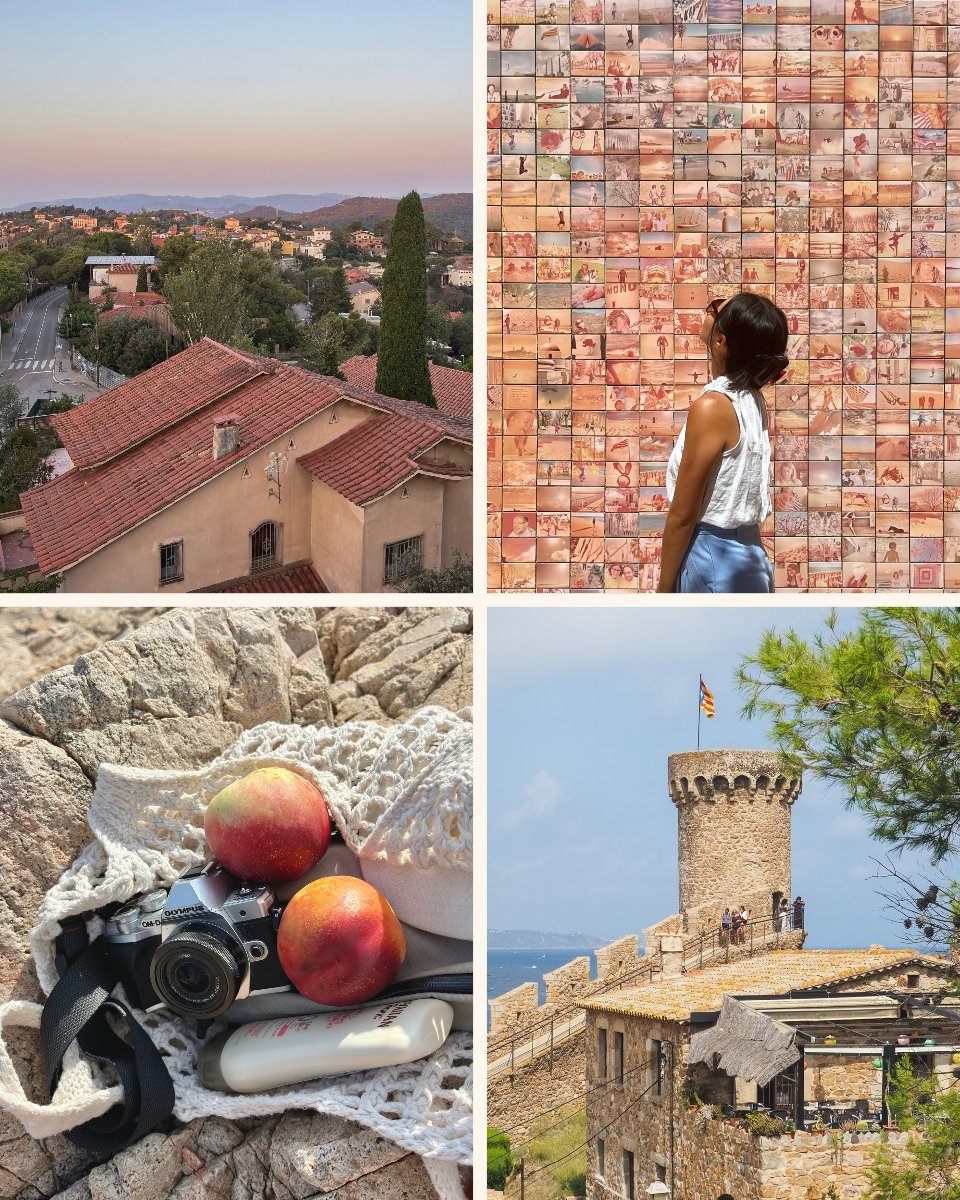
Barcelona delivered exactly that those things. Placing myself in a co-working house nestled in the peaceful Vallvidrera mountains, it was this quiet oasis away from the bustling city that allowed me the best of both worlds: Meeting a genuine remote working community whilst being close to this incredibly vibrant and sough after part of Spain.
Seville was the better lesson in what slow travel is actually supposed to feel like when I arrived there a few weeks later. It is quieter and much more quaint, and certainly far less geared toward remote workers than Barcelona. My work station became at a desk next to a glistening pool as the Andalusian heat beat down on me even in the early hours of the morning.
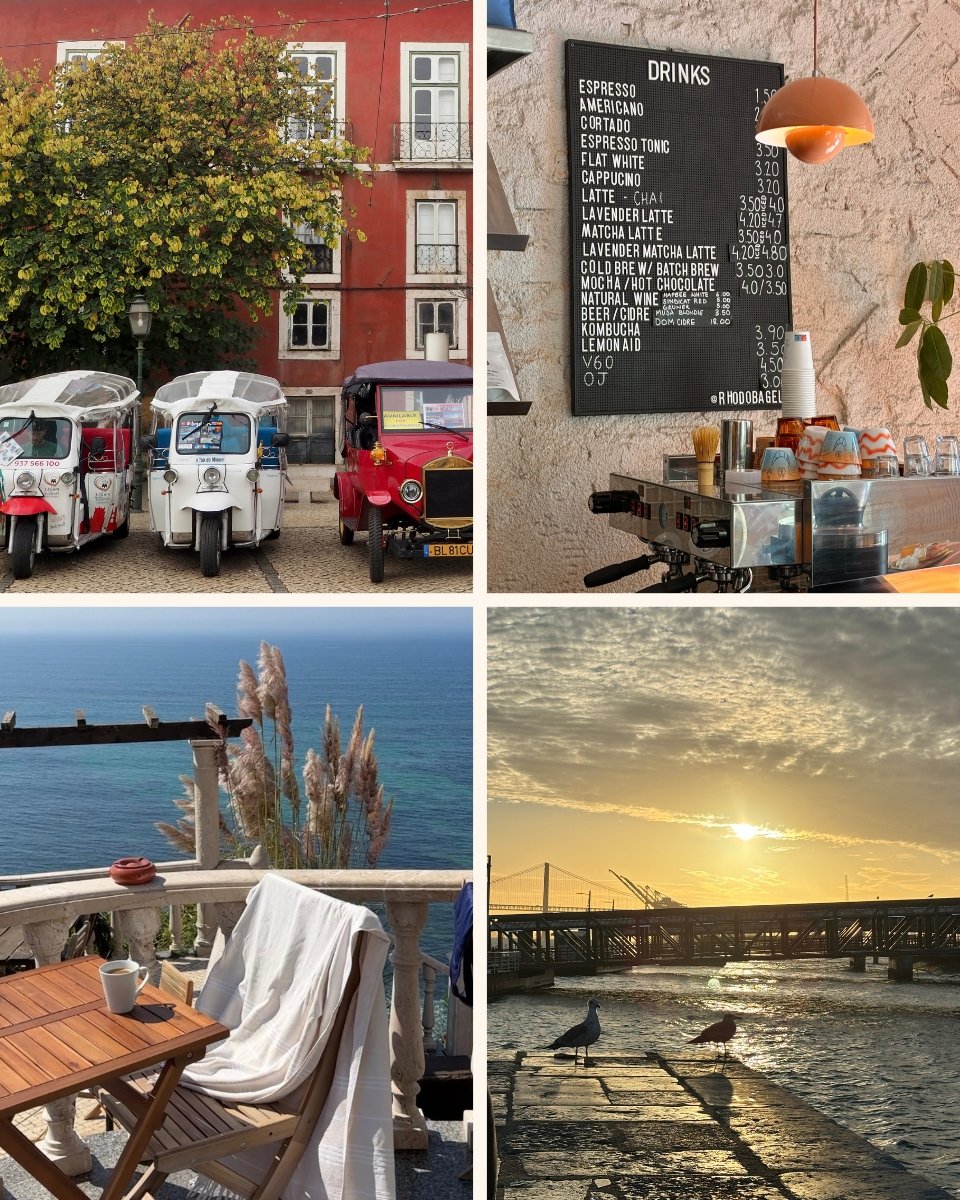
Portugal: Ericeira and Lisbon
Portugal was chosen purely on vibes, and it turned out it uncovered one of the non-negotiables if I were to ever pick a new nomading destination. I credit the small town of Ericeira, a surf town about forty minutes outside Lisbon, to have shaped the need to spend my mornings waking up to salt and sea, with the promise of surf after my day was done. This place delivered a small town community feel that I did not expect, turning a fear of locating myself in too small of a place for too long into appreciating what it means to learn to love what is available there.
Lisbon gave this leg of the nomading its city contrast. Often referred to as one of the best digital nomading hubs in Europe, it proved its worth a thousand times over for me. With its more established remote working community, it is so easy to make friends and surround yourself with people all over the world trying to achieve the same thing as you are. Its stunning old town areas are a beauty contrasted with the industrial look of the port, making Lisbon an unforgettable city that has earnt every accolade people sing about how well equiped this place is for remote working.
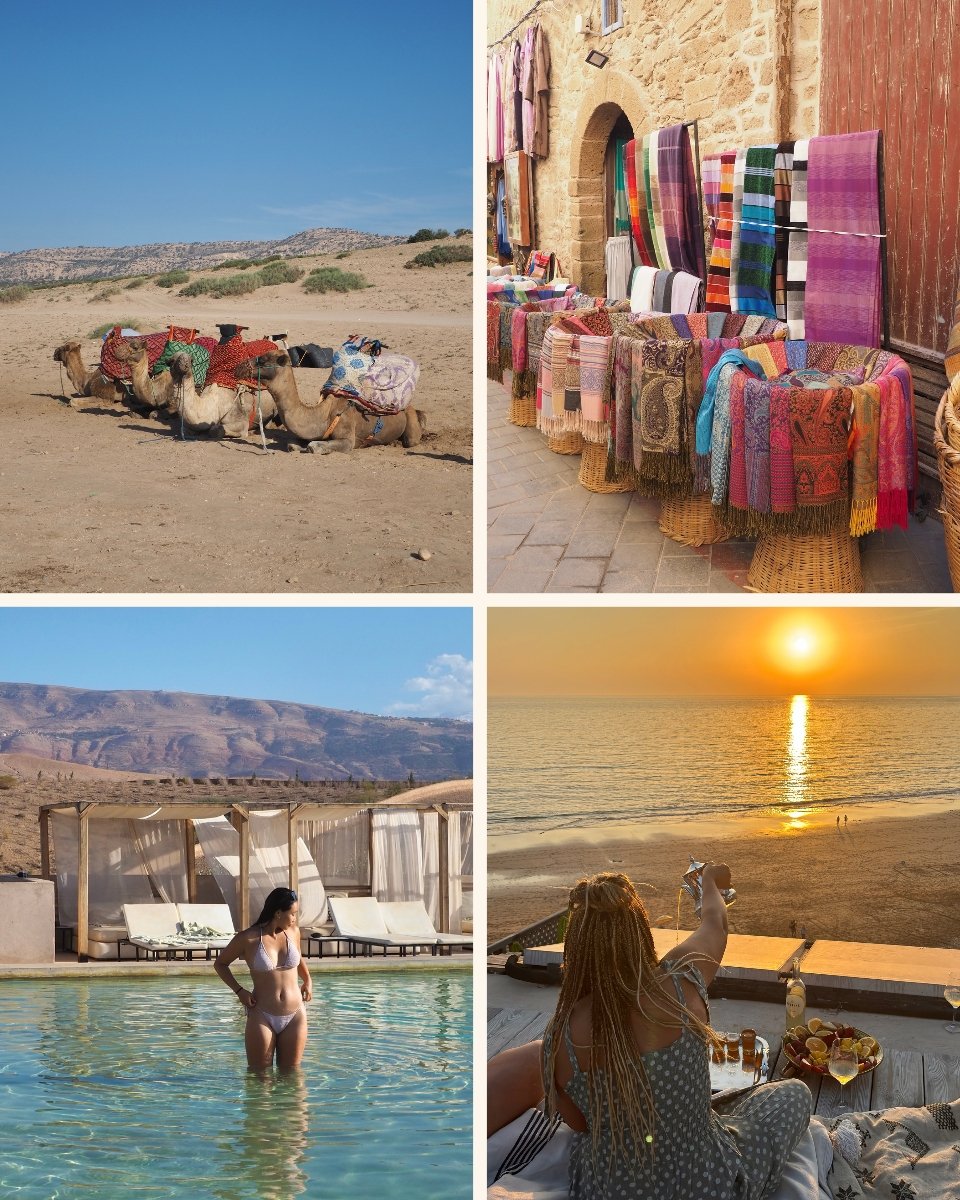
Morocco: Taghazout, Essaouira and Marrakesh
Morocco was the leg I was most nervous about being a solo female traveller, yet is the one that ended up teaching me how important it is to keep an open mind. Taghazout was this undiscovered gem, a carefree surfer paradise on the Atlantic coast. It had a rhythm not unlike Ericeira, with the added benefits of being sun-baked well into the ‘winter’ months, and considerably cheaper, with a tight-knit community of travellers who made the adjustment far easier than I could have hoped for.
Essaouira, only a few hours up the coast, gave a slower, windier, more historic taste of what a Moroccan town could be like. Both places had fewer remote workers, only fishing boats and medina alleyways, and it felt like a stepping away from the nomad bubble I had been in for a while now.
Marrakesh itself was an absolute wonder that is hard to describe. It is a full sensory shift from the laid back coast, replacing it all with its souks, the midday heat, vibrant colour and noise in a way that no amount of reading about it prepares you for.
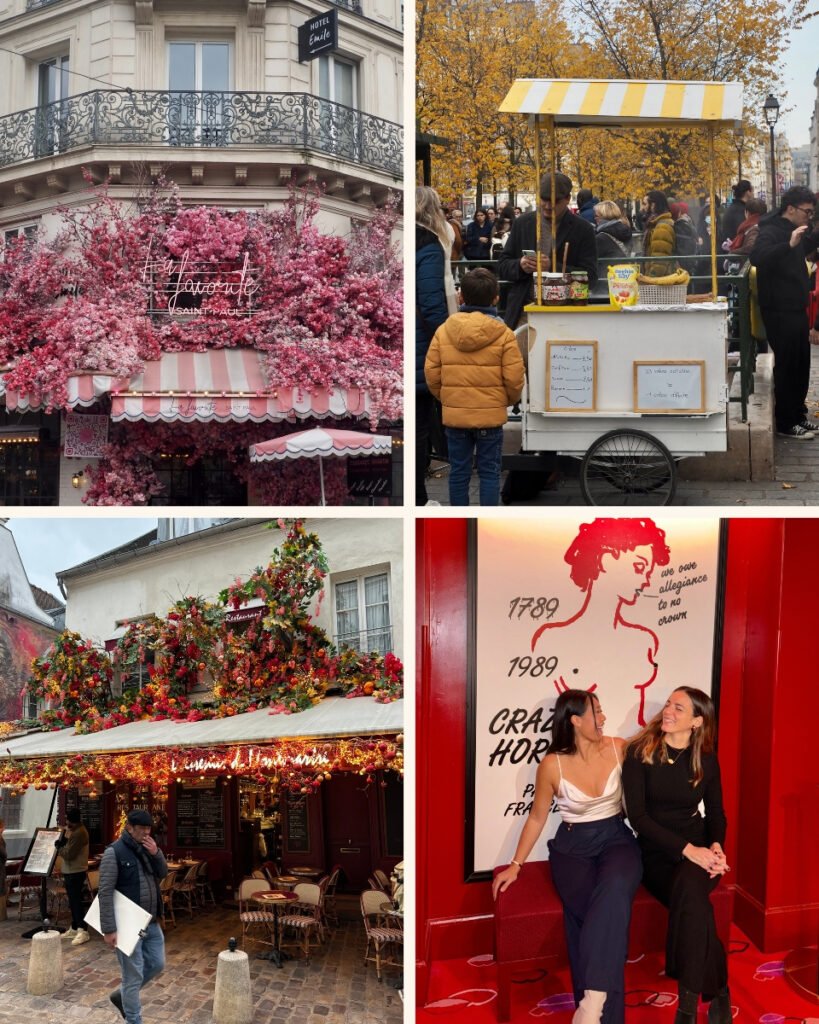
France: Paris
France is my most visited European country, yet every time it holds such special meaning for me. Paris was nothing short of a deep dive into the country that made me first fall in love with travelling. The beautiful architecture and the movie like atmosphere in the winter was every bit as special as it was the first time I landed. It held the nostalgia of what I felt living there a decade earlier at 18 years old, and to this day this renowned city remains the one that shaped a lot of how I think about travel in the first place.
Paris would have also, unsurprisingly, been the most expensive leg of the trip had I not had the connections I did to live in a lovely appartments tucked in the streets of the 9th Arrondissement or outside the fairy lights of le Marais. Being able to go at a living pace, set my own routine, and revisit places I remembered with a decade of in between memories was one of the more quietly emotional parts of the whole six months. Celebrating Christmas there with friends I had made along the way really made ending my journey feel like a full circle moment.
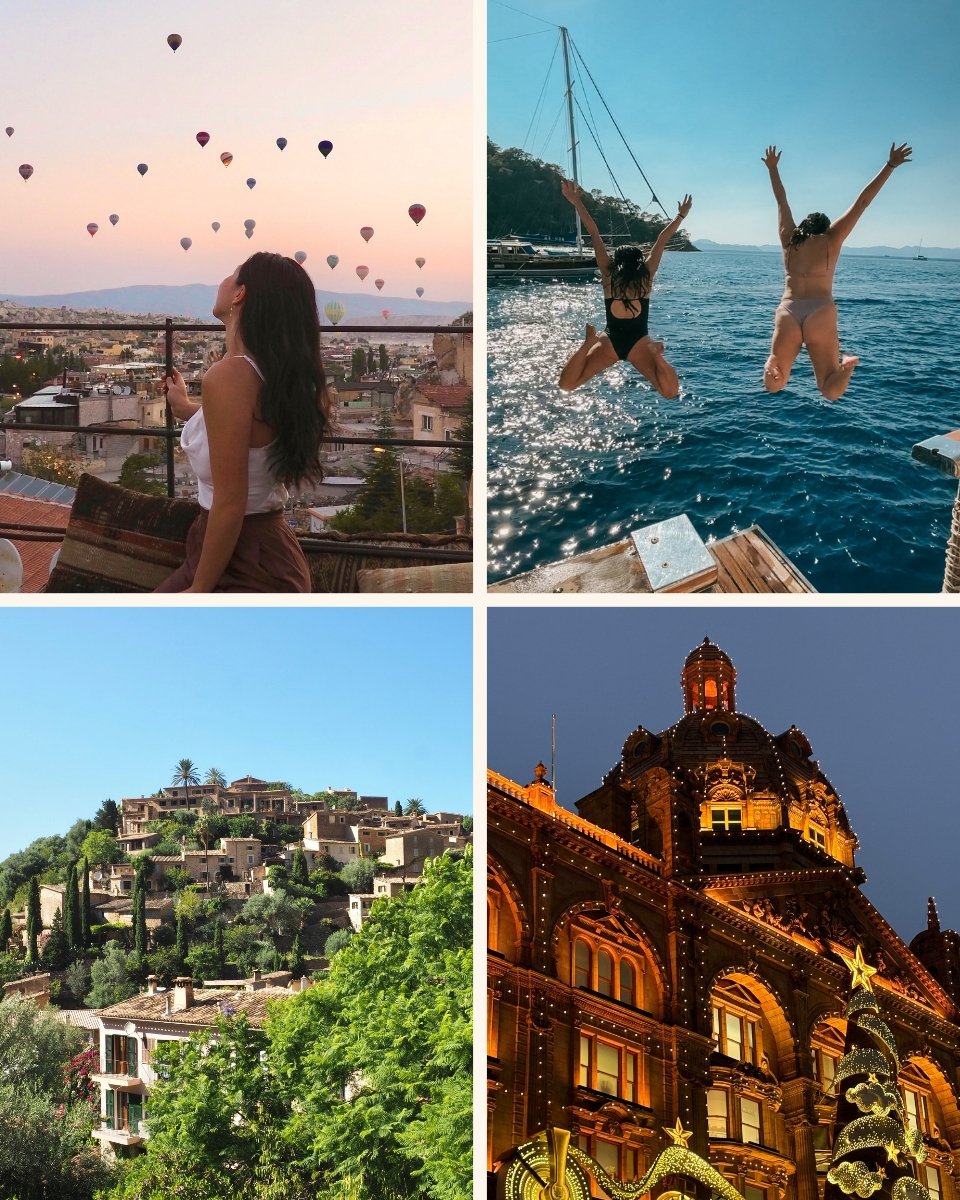
+ The Detours:
Not every stop on this route was a work base, and these little side quests freshened up and enriched my experience greatly.
- Cappadocia – For a bucket-list hot air balloon trip
- Turkey’s Turquoise Coast – For sailing from Fethiye to Gokkaya Bay
- Mallorca – For a week of Spanish island life
- Strasbourg – For Christmas markets and a winter getaway
- London – For visiting friends and final stop to the journey.
Mixing in fully offline breaks like these was honestly what stopped the whole six months from blurring into one long, unbroken work stretch. It is easy to assume a digital nomad trip means working the entire time you are away, just from nicer locations, but some of the best memories came from my work enabling me to be somewhere new and exciting – and how I took advantage of that!
Frequently Asked Questions: What I would have loved to know
Can a non-tech person like an engineer actually work remotely?
Absolutely, however the success of this requires communicating a clear plan for a defined period and with the right setup. It is entirely possible, and whether you can work remotely relies on your ability to address all the opportunities and concerns that an employer might have about the opportunity.
Even for those in traditional professions outside of engineering (think lawyers, accountants, teachers) where digital nomading may not be common, there are still many tasks that you can focus on which are not location specific.
How do you manage time zones when working remotely as an engineer?
More easily than you’d expect, once you get into a routine.
The key is setting clear availability windows at the very start, without trying to replicate what that looks like compared to a normal office day back at home. If you can communicate your boundaries in advance, then everybody is across when it is appropriate to contact you or expect to you deliver a piece of work to reasonable expectations.
Do you need a visa to work remotely in Europe or Morocco?
It depends, largely on the passport you are holding and the duration of the stay.
I would strongly advise that research into visas is done thoroughly before embarking on any sort of remote work. My advice came from direct emails to the embassies, allowing me to show proof of understanding should the length or intent of my stay be questioned at the border. Many of these countries including Spain and Portugal now have dedicated remote working visas (with many others to follow in the next few years) worth exploring if you’re planning a longer stay.
How much does it actually cost to be a digital nomad in Europe?
A hard question, because this is very dependent on the countries visited and the lifestyle you lead.
Based on my six months across my travelled countries during digital nomading, a realistic monthly budget for a comfortable but not extravagant lifestyle varied quite greatly from AUD $2,000 in Morocco to AUD$3,500 in France. Lots of factors go into this, such as my work setup, connections, spending habits as a result of the social groups I encountered.
If you’re interested, I’ll break down my actual month-by-month spending in a dedicated post where we can talk real numbers, not just averages.
Is the digital nomad lifestyle actually sustainable long-term?
Yes, and there are many examples of those who live a long term digital nomad life. The infrastructure from what I experienced has been set up, and with time will continue to cater for a new generation of digital nomads.
You have to be prepared that the version you see on social media is not the only thing at play. What people saw of my own social media were highlights, but that is also paired with the effort that comes with making friends, the isolation when things don’t go well with work, and missing out on life events happening back home.
I do believe it is genuinely sustainable, but for me it was fine to be something I experienced before returning to a life at home. And there is no better way to finding out for yourself than giving it a go.
Final Thoughts
I won’t sit here and say that digital nomading suits everyone, but the biggest takeaway I wanted people reading this post to know that it is entirely possible to digital nomad even without a tech job. My biggest life philosophy has always been: The worst thing they could say is no, but what if they said yes?
With all good opportunities comes the planning to make sure it happens, and I have full confidence that my tried and true strategy will help more people get to working at their dream destinations, without giving up the career’s they worked so hard for. Everyone’s journey will look a little different, and I cannot wait to hear more about your personal stories, and answer any questions you may have.
Sign up on my email list below, and stay updated for more digital nomading stories and tips, and destination guides to help you create the best possible adventure.