Yala National Park: The Complete Guide for Sri Lankan Safari and Wildlife
There are a few defining experiences when it comes to travelling that can only be done in certain parts of the world, but every adventure seeker will tell you that going on a wildlife safari would be extremely high on the list. And the secret is out: Sri Lanka is an understated place to do it, having maintained such a harmonious relationship between the local people and its exotic animals.
And Yala National Park? This stunningly massive area of sand dunes, sea channels and native bush that sits on the south-eastern coastline of the country is home to numerous species of wild animals and birds. And not only that, it is one of the few places in the world that has a relatively high density of leopards, which is a rare but incredible sighting.
This was the one experience that Pat and I had been so looking forward to along the two week Sri Lankan trip that we had planned, so much so that we made it a point to spend a night in Yala for the sole purpose of being in a great position to start a sunrise safari and see as much as we could.
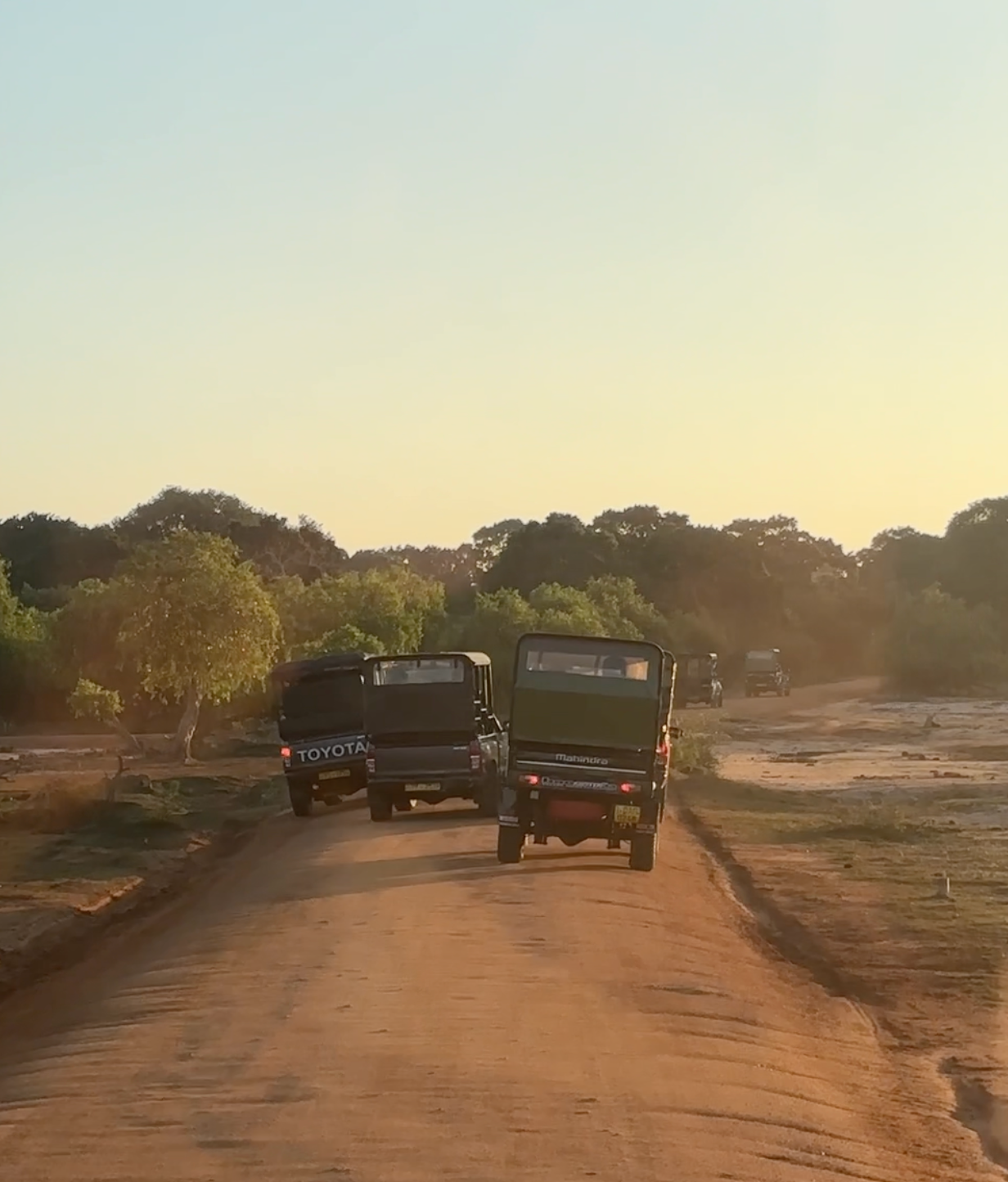
There is something so refreshing about getting up at the crack of dawn to hop into a massive jeep, thundering down the dirt roads as the light breaks beyond the horizon. It is hard to describe the out of body feeling of having a traditional breakfast on the hood whilst listening to the wild birds sing and fly amongst the ponds. Or looking down the lens of a binocular to spot a herd of wild elephants and their little baby splashing around in the distance. And on the eleventh hour, we could not believe our luck in catching a glimpse of that rare leopard stalk out of its shaded spot to the waterhole and take a long slow drink.
To make sure you enjoy your stay and safari out here in Yala National Park, here is our comprehensive guide based on our own experiences for the best tips and tricks to help you make the most out of your trip.
What you’ll find in this post:
- Yala National Park overview – and who this is for
- Animals in Yala National Park
- When to visit Yala National Park
- Booking a safari in Yala National Park
- Where to stay in Yala National Park
- The practical stuff: Transport and cost breakdown
- FAQ: Frequently Asked Questions
- Final Thoughts: Is Yala National Park right for your Sri Lanka trip?

Yala National Park Overview
| Category | Yala National Park |
|---|---|
| What to Do | Safari and wildlife watching, glamping experiences |
| Where to Stay | Koragaha Lodge Yala, Cinnamon Wild Yala, Wild Coast Tented Lodge |
| Transport | Tuktuks, private cars |
| Cost | $250-$300AUD (LKR 58,600 to LKR 70,400) each per day |
| *Based on current exchange rates as of Sep 2026. |
Who is Yala National Park for?
Yala National Park is worth the visit for travellers who want the experience of seeing wildlife in a safari form, without spending a fortune on costs.
Yala itself is a vast place, and everything is set up to facilitate seeing and viewing these exotic animals in their natural habitat. Outside of the safari tours, there is not much else to do in Yala as you cannot access the park, however the stays around the national park are an experience within itself if you choose a glamping style accommodation which will further enrich this leg of the trip.
Because safaris can be booked as a solo traveller to form a group or privately, it makes this destination a wonderful choice no matter who you’re travelling with. Outside of the safari, Yala National Park is not as social as other parts of Sri Lanka such as Ella or Hiriketiya nearby, so if you are travelling alone, it would be worth considering moving on swiftly, or doing a day trip out here instead of committing to a stay.
What animals to see in Yala National Park
The selection of wild animals found in Yala National Park is impressive, mainly due to the fact that this park is very large. In fact, it is large enough to be split into five blocks, of which any given safari tour will be located within one block during the entirety of the tour to ensure that tourism is controlled and that animals are not disrupted.
The selection is so diverse because there are several different habitats which exist across a very short distance. Mammals in the bushlands or the dry dunes, then reptiles and birds that spread across the various ponds and sea channels leading into the ocean water.
We went with a sunrise safari within Block I which is the biggest block, and to name a few that we saw during our time there: Water buffalos, elephants, crocodiles, wild boars, peacocks, jungle fowls, monitor lizards, storks, and many more. And of course, the elusive and rare leopard.
We do want to highlight that while you’ll be guaranteed to see a great range of wild animals, this is still nature. Whilst they try their absolute best (and we have seen them rushing from spot to spot as the calls come out on the radio for sighting), it is beyond the control of the jeep operators and guides to promise sightings of anything in particular. Any especially with leopard sightings, they are actually very rare, so manage those expectations and you’ll have a great time regardless on one of the most interesting and unique experiences you could have within Sri Lanka.
When to visit Yala National Park
Sri Lanka runs under monsoon periods that sweep over different parts of the country during the year, but unlike other destinations where it is likely that you would target dry season, Yala National Park is able to deliver pretty much all throughout the year.
This is because the diversity of animals is so great that each run on their own seasonal patterns. And where one weather pattern works best for some when the park is lush and green from the rains, waterholes stocked up and mud runs rampant, another will work for those that love the dry heat and the sun baked earth.
In general, if your main goal is to sight the leopards or see elephants, March to July is ideal as the dry season has had time to shrink down waterholes and grass is a bit thinner to be able to see more activity. For bird lovers, the migratory period is November to February, as this aligns with the biggest concentration landing in the area.
The other consideration is that the region around Yala National Park is at its peak during December to April, which means other tourists are likely in the area. This means the park is at its fullest, and more jeeps means more noise and traffic, which negatively impacts the environment for the animals to come out in. To avoid this, try to visit outside of peak season, and you might get an even better experience at a cheaper rate.
Booking a safari tour in Yala National Park
Without a doubt, the must do experience and probably the sole reason you are even here in this region when visiting Yala National Park is to go on a safari.
Booking a safari is not the hard part, but booking the right one for what you want might be the confusing part.
Pat and I certainly had grand plans to get this all organised before our trip. But with the competing advice around booking early vs getting local recommendations vs hotel and accommodation packages, it all just got a bit too overwhelming to consider… until we realise the day we arrived in Yala that we still hadn’t booked anything.
Cue the rabbit hole of looking for a good jeep operator, and negotiating price-points, and making a decision so that we didn’t miss out on that morning slot we wanted. It was probably a bit chaotic for most people’s liking.
But after all that fumbling around, what we can now give is some good advice on how to pick the best type of safari experience, and some insider information that hopefully will give a bit of perspective into which way to go.
After all, we did somehow end up in a private jeep, have breakfast catered for us inside the park itself, and managed to spot a rare leopard… Some would call that a massive success.
Insider Details:
- Safari tour prices vary quite significantly, mainly considering if your tour is half or full day, combined or private. Our tour was private (although we didn’t realise this, so it was a nice surprise) and half day with permits and breakfast included, which costed 24,000LKR each. Other travellers have quoted between 17,000-20,000LKR each for half day shared jeeps, and 25,000-32,000LKR each for full day shared safaris.
- A 7,000LKR park entrance and permit fee is required per adult, and some tours do not include this so please check and consider this cost.
- Safari jeeps can only enter the park at 6am or midday to control the disruption to the animals, therefore those are the strict times all tours will start depending on which time of day is selected.
- Most tours will offer to pick up from the hotel/accommodation as long as it is within a reachable range, therefore to make sure there are no problems with this, we would recommend staying in the nearby towns of Tissamaharama, Kirinda or Palatupana.
- For the average safari lover, go with a half day safari over the full day. This is still a full 5-6 hours of wildlife watching and you will see many of those animals in this period, while still keeping the experience fresh. A full day sounds tempting to maximise your chances of seeing those rare animals, but most wildlife is out during either dusk or dawn anyway.
- Between sunrise and midday, wake up early for the sunrise one. Not only do you get the beautiful transition of dark, to dawn and then early morning sun which illuminates the landscape, most animals are active during this time of day rather than at midday. It is extremely hot during most times of the year, so this also means getting out of the sun before the sun is at its peak.
- Make sure you have a guide included for your safari. As we found out, this is different to just having a driver, as this dedicated person has extensive knowledge about the park, and can help you spot animals whilst you are on the road. We were lucky enough to have a volunteer hop into our jeep at the park to give this guide, but this is not guaranteed.
- If you are not staying in near the national park which might be the choice if you are solo travelling, it is still possible to book a safari day trip from the likes of Ella or Hiriketiya. However, do consider the time to complete this as the journey could take up to 2-2.5 hours itself one way, and so that option becomes a long day.
Where to Stay in Yala National Park
There are a few different towns located around the entrances of Yala National Park that form a good base particularly if you have decided on a sunrise safari. Tissamaharama (or simply Tissa) is a natural pick since it is only about 20-30 minutes from the park gates. The other option that some others have picked are Kirinda and Palatupana, which are more along the coastline and therefore have a beachier feel than the inland stays.
Where these accommodations excel in is providing a very luxurious resort like stay across all categories, and feature unique aspects like lodges, huts and even glamping sites should that be something you fancy.
Here is a list of accommodation across every budget category that we looked into during our stay in Yala National Park, including the one we decided to rest up in before our morning safari adventure.
Koragaha Lodge – Yala
Budget Traveller
It seem strange putting this lodge that we stayed in under the budget category, but the options in Yala tend to be on the pricier side. Considering how beautiful and peaceful this resort like hotel was when we first stepped foot after a long day on the road from Ella, it truly delivered outside of its category.
Greeted with cold towels and a delicious ice tea, we were promptly taken to our room which was the most spacious we had in the entirety of our Sri Lanka trip. The bed was massive, the floors were cool marble and very clean, and the bathroom had this lovely indoor-outdoor flow that made you feel connected with the nature around. Something we really didn’t expect to find considering our main purpose was ensuring we were nice and close to the entrance gates, and this place was only a short 15 minute drive there.
The grounds was equipped with a beautiful pool that we unfortunately didn’t get the chance to use, but we did a walk around and there is even a lovely restaurant on site serving some local cuisine. We even got a warning about not leaving our clothes and shoes out as the monkeys and dogs love to come and grab them. Cannot get more steeped within nature than that!
Book: Koragaha Lodge
Other Great Budget Options
- Art Yala Boutique Resort
- Yakaduru – Yala
- Ranakeliya Lodge – Yala
Cinnamon Wild Yala
Mid-Tier Traveller
Closer to the other entrance in Kirinda, Cinnamon Wild Yala has established itself as a popular favourite to experience the relaxing chalet style rooms that represent both the wild nature around and the proximity of the coastline for that more effortless stay.
The warm timber feeling of this style of accommodation really plays on the hut aesthetics that is so prominent in this region, yet it is elevated to feel like a great relaxing base to enjoy all that the park has to offer.
The grounds themselves have a large pool, a rooftop bar, a restaurant serving great authentic meals, and even options to create even more personalised experiences like candlelit dinners on the beach or booking private safari tours.
Book: Cinnamon Wild Yala
Other Great Mid-Tier Options
- Jetwing Yala
- Wild Culture Yala
- Tribe Yala – Luxury Camping
Wild Coast Tented Lodge
Luxury Traveller
To go all out on a design award-winning coastal tented stay for that true sense of luxury in the wild, Wild Coast stands at the top of this list.
This site redefines luxury camping, where guests stay in elegant and immaculately designed cocoons just behind the beachfront and nestled on the fringes of the national park itself. These domed suites provide that coveted tented style living, equipped with soft beds and warm interiors whilst maintaining that connection to the surrounding nature as the highlight point. Some rooms even have private plunge pools that add an extra touch, much needed after a full day of exploring.
The on-site areas involve large woven pavilion to rest under and a gorgeous bar. The restaurant is said to be absolutely incredible, all the way from immersive bush lunches, to high teas in the afternoon, and dinners out in the starlight to help truly experience the rich surroundings of the land and sea around.
Book: Wild Coast Tented Lodge
Other Great Luxury Options
- Uga Chena Huts – Yala
- Hilton Yala Resort
- Leopard Trails – Yala
The practical stuff: Transport and cost breakdown
Transport
Yala National Park is most likely done as you leave or enter the Southern Coastal region, or from the Ella. Either way, the transport here is a little bit tricky because all the accommodation is relatively spread out, and it benefits greatly to have a private driver who can drop you off at the doorstep.
If you have followed our two week itinerary through Sri Lanka and have therefore come from Ella, the best and most efficient way is to go via private car, which is a 2-2.5 hour journey. There is a direct bus option that will go from Ella to Kataragama to get closer, however this is close to a 5 hour journey to a spot not quite at the final destination, and you’ll have to add extra time to get to your accommodation from here via tuktuk.
If you have come the other way from a coastal town like Hiriketiya, it is again a 2-2.5 hour car ride to reach most of the towns around the national park. There are no direct buses, and the estimated time travelling in this way reaches 8-12 hours, which is not suitable for most travellers.
Once in towns near and around Yala National Park, the best option is to use private cars or to ask the hotel to arrange a tuktuk. Because it is not very walkable (and dangerous at night being so close to a concentrated area of wild animals), it is important to know what the options are if you are to leave the accommodation. Otherwise, most accommodations will be inclusive of on-site restaurants and amenities to help so you wouldn’t need transport once you’re there at all.
Cost/Budget
The total cost for our 1D, 1N in Yala National Park was $279.80 each.
- Note that all figures are in Australian Dollars (AUD), and will be referenced as such throughout.
The full breakdown by category:
Accommodation = $121.30 per day
Transport = $35.80 per day
Food/Drink = $20 per day
Entertainment = $102 per day
Spending = $0.00 per day
Admin = $0.70 per day
Other = $0.00, no unexpected events.
The following spending trends were what we noticed after looking at our final costs.
- The safari is the most significant spend outside of the accommodation cost, but this was a bucket list adventure for our Sri Lanka trip.
- Transport costs were all associated with the private car to get to Yala National Park, not travelling within as we did not need to leave our accommodation until we were finished with our safari and our time there.
Please keep in mind a few things that may differ for you:
- Time of travel: Part of our travel fell in the shoulder season for the South/West (having some time in April), and the limited flight paths at the time cut off travel routes for a lot of European flights. These factors lowered tourism numbers and potentially cost for the safari experience and our accommodation prices.
- Travel Style: Our travel style for this trip is in the middle range, where we were seeking budget travel, or luxury top end. You can definitely save or splurge more than us, see our recommended list of accommodation for every budget category.
Frequently Asked Questions (FAQs)
How many nights should you spend in Yala National Park?
One night, particularly if you are doing a morning safari.
It was worth enjoying the wild nature and the novelty of staying in a resort or tent like camp which is a different flavour to the rest of Sri Lanka. However, we would do one night at most, as after the highlight of a safari, Yala National Park does not have too many other activities to do compared to neighbouring areas like Ella or Hiriketiya.
Do you need a driver and guide, or can you self-drive through Yala?
Yes, you must book an authorised and dedicated safari jeep to entre the national park.
However, be aware that the driver is different to a guide, and it is likely you will need both. It is worth ensuring that a guide is present so that you can get the most information about the environment and the animals that you are seeing – we were able to spot and see so much more thanks to our guide pointing things out.
What should you pack for a Yala safari?
Neutral coloured clothing that is layered to adapt to the coolness of the mornings and then the heat of the afternoon is essential.
Then supplementary items include a hat, sunscreen, water, binoculars (although your tour may include these) and camera gear. Larger zoom lenses are necessary if your purpose is to get some good photography of the animals, which are often at a distance from the vehicle.
Is Yala worth it compared to Sri Lanka’s other national parks?
It depends what animals you would want to see.
Yala is the most visited and best known for leopard density to sight these rare animals. This makes it worth it for those who are seeking to see them specifically.
While we do not have first-hand experience with other national parks in Sri Lanka, we have also heard from other travellers that Udawalawe is a strong contender for elephant sightings, with the bonus of fewer tourists.
Can you visit Yala National Park as a day trip instead of staying overnight?
Yes, there are plenty of tours that operate from popular neighbouring towns like Ella and Hiriketiya which allow you to do a safari as a day trip.
Just be very mindful that these are long days due to the travel distance, however they are great options especially for those who do not want to stay near the national park like solo traveller who prefer to be based somewhere less isolated.
Wherever your travels may take you, having travel insurance is non-negotiable.
Particularly in this part of the world with these kinds of activities, injuries and unexpected events are common and cannot always be avoided. To make sure you have peace of mind that you’re kept safe during any travel event, make sure you purchase travel insurance before your trip starts.
AFFILIATE OPPORTUNITY Insert a SafetyWing travel insurance link here.
Final Thoughts: Is Yala National Park right for your Sri Lanka trip?
Yala National Park is really for that something special during your trip, where the beauty of the wild and the vast spread of animals can be seen up close and personal from a safari jeep. It is also one of the most affordable places in the world to have such an experience, and therefore makes it accessible and hard to pass up for traveller on all budgets.
The positioning of the parks makes it a natural detour from popular destinations you may be visiting anyway like Ella and Hiriketiya, and can be done as a day trip from those too as an option to still experience what this vibrant park has to offer. Check out my comprehensive guides to both of those to help form the perfect itinerary for your Sri Lanka adventure.
Stay tuned for comprehensive guides to more of these Sri Lankan cities and towns as they get published – sign up below on the email list and be the first to be notified!